
A three day Southeast Asian Conference on Alternatives was organised by MASSA – Movement for Alternatives and Solidarity in Southeast Asia from Nov November 11-13, 2025 at Siem Reap, Cambodia
The theme of this conference: Cross-Border Solidarity for Peace, Culture and People’s Alternatives in Southeast Asia. (More details in the attachment)
Dr Eri Trinurini (ASEC/ASSEC) alerted us of this program and sought the support of our organisation to send participants on behalf of ASEC.
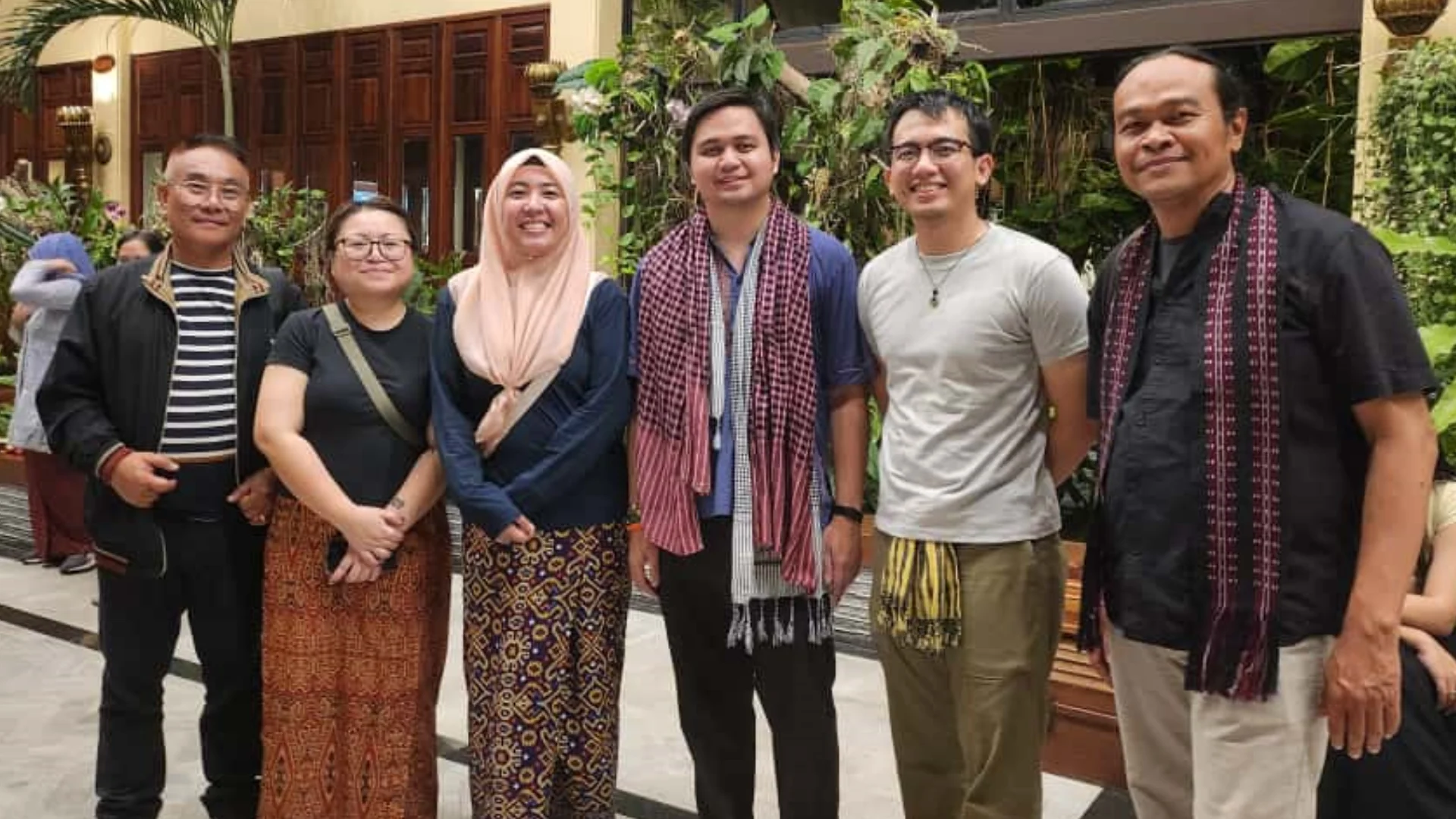
From Malaysia two staff from the APPGM SDG Secretariate participated at this conference namely Ms Melissa Riman (Mel) & Ms Hirza Mohd Tahir (Hizra).
Ms Zoel Ng of MySDG Academy commented that “this is a regional conference to identify movements that are resisting mainstream development and promoting alternative practices by grassroots communities, and link these to form the building blocks of a people’s alternative regional integration in South East Asia”.
Reflections on the conference
Both Mel and Hirza posted photos and reflections in the office WhatsApp group and based of their sharing this article attempts to capture their experiences and reflections.
Day 1 (11.11.2025)
The day opened with the Cambodian national anthem, followed by a graceful Khmer welcoming dance — a beautiful reminder of the region’s shared heritage and diversity.
In his opening remarks, Prof. Eduardo Tadem, Convenor of the Program on Alternative Development, University of the Philippines (UPCIDS Alt Dev), reflected on how borders in Southeast Asia were products of imperialism and colonialism. He called for a mainstreaming of alternative regionalism — one that reconciles tensions and conflicts between peoples through the exchange of ideas and experiences, fostering a genuine paradigm shift in how we imagine the region.
The second keynote, delivered by Chandy Eng, Executive Director of Gender & Development for Cambodia, was equally powerful. She spoke of the realities of displacement and forced mobility — with 1.2 million Rohingya displaced and 7 million people leaving Southeast Asia. Chandy also highlighted the rise of criminal networks such as online scams across Cambodia and Myanmar, now estimated to be a $40 billion industry.
Her message struck deep: people have become statistics — and statistics serve patriarchy. Feminist approaches that centre on stories are being sidelined, yet it is these stories that humanise and give voice to real struggles. It’s time to centre the stories, not just the numbers.
Favourite Movement
Mel noted her favourite moment of the day namely the discussion on Youth Futures of Alternative Regionalism.
Su Yadanar Myint from Impact 360 Myanmar, a young Burmese activist, shared her powerful story of resilience — having been imprisoned at a very young age for criticising the military through performing arts. Her courage in continuing to champion youth activism despite immense risks was deeply moving.
From Indonesia, Ikhsan Ramadi recounted his journey through student radicalism and activism during his university years. One of his most inspiring achievements was leading efforts to unionise female cleaners at his university — women who had long been exploited by both the institution and local gang groups. Their success became a symbol of solidarity across class and gender lines.
The session also explored how social media has become both a tool and a driving force for youth activism — shaping awareness, building movements, and connecting struggles across borders.
In the afternoon, participants were divided into groups to discuss the identity and meaning of being part of Southeast Asia.
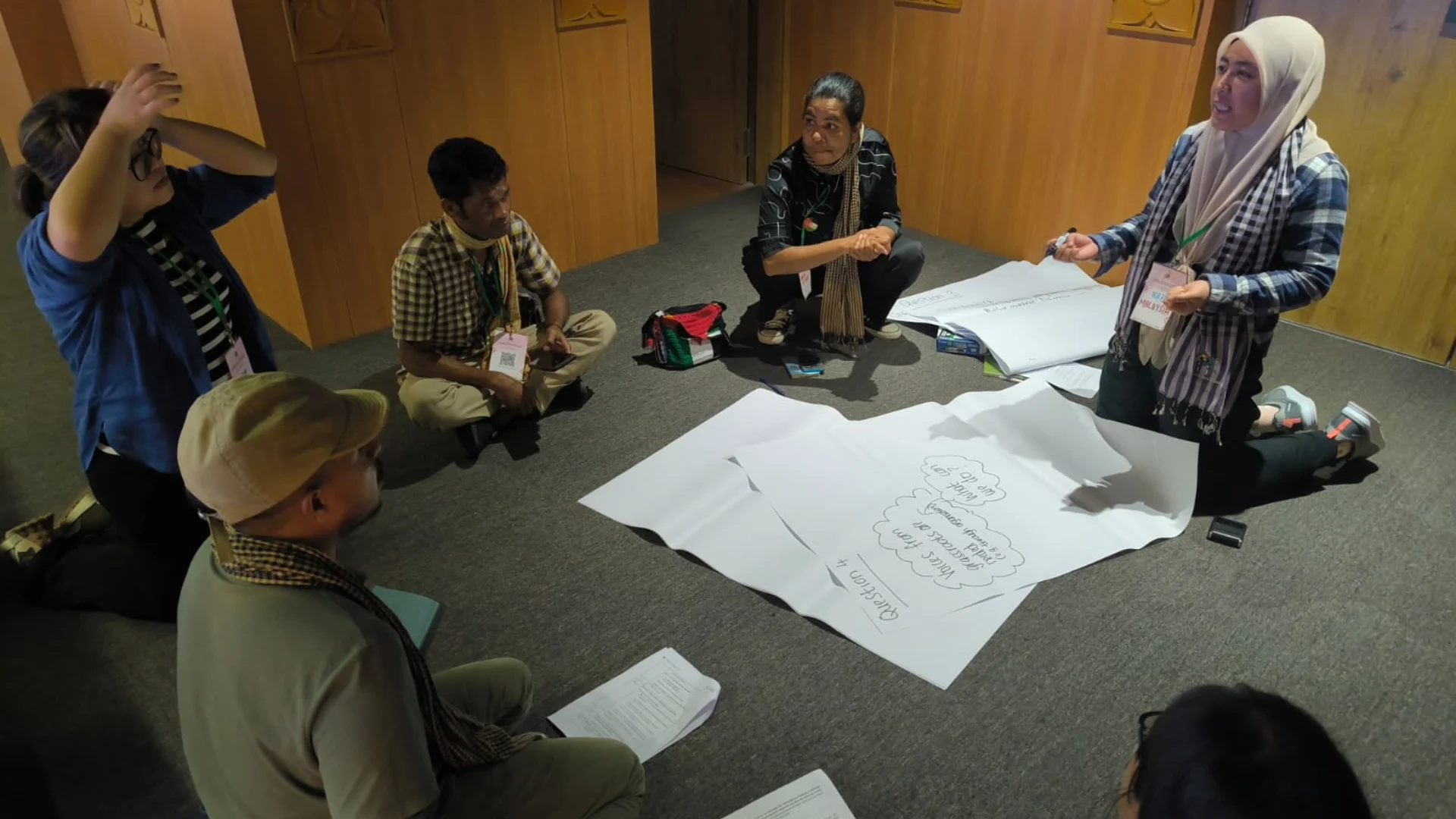
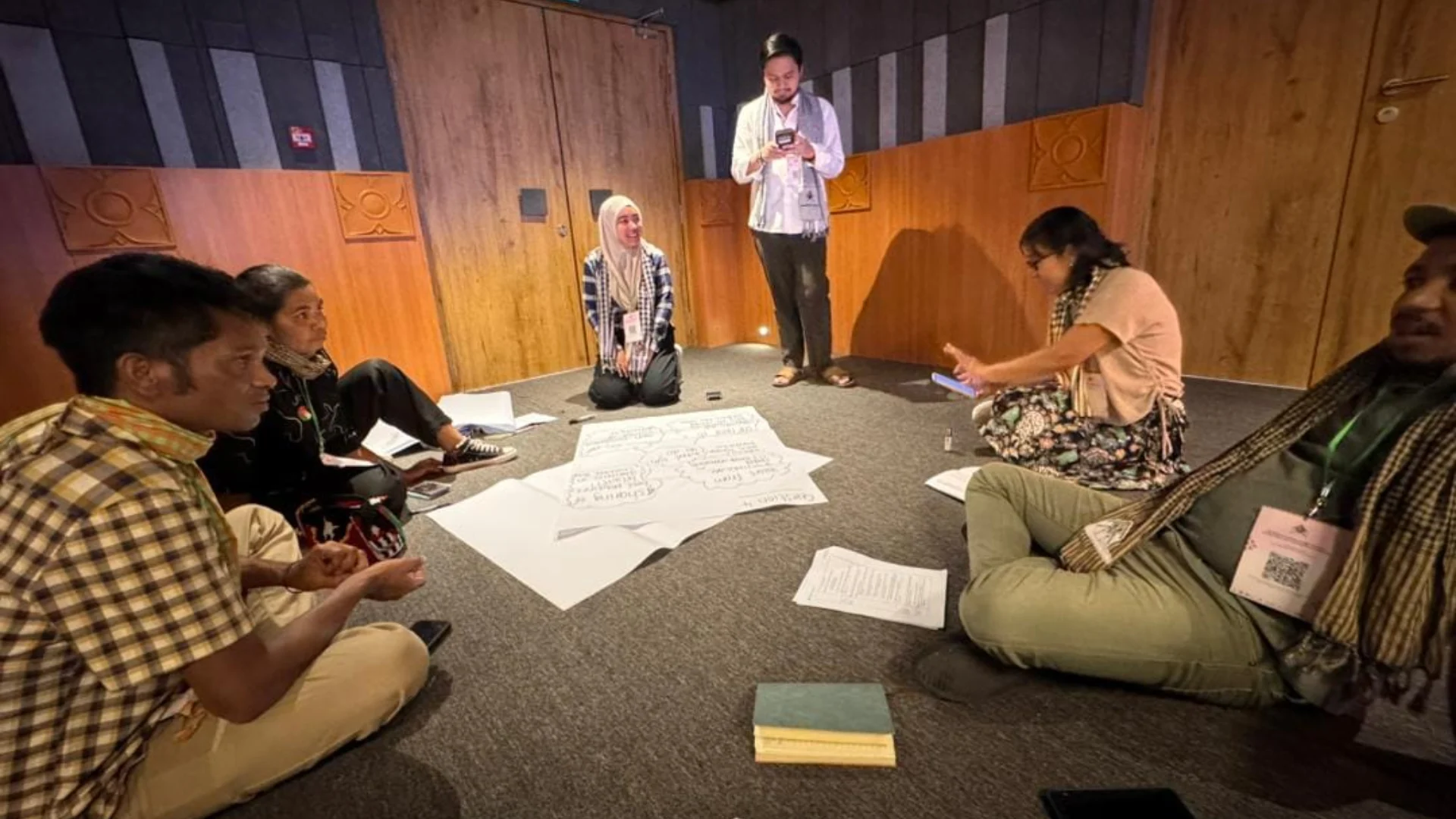
Hirza and Mel facilitated Group 3, which included coffee farmers from Timor Leste, activists from Flores, and representatives from the Philippines. The discussion focused on shared experiences of community resilience, cultural identity, and regional cooperation from the perspective of grassroots movements.
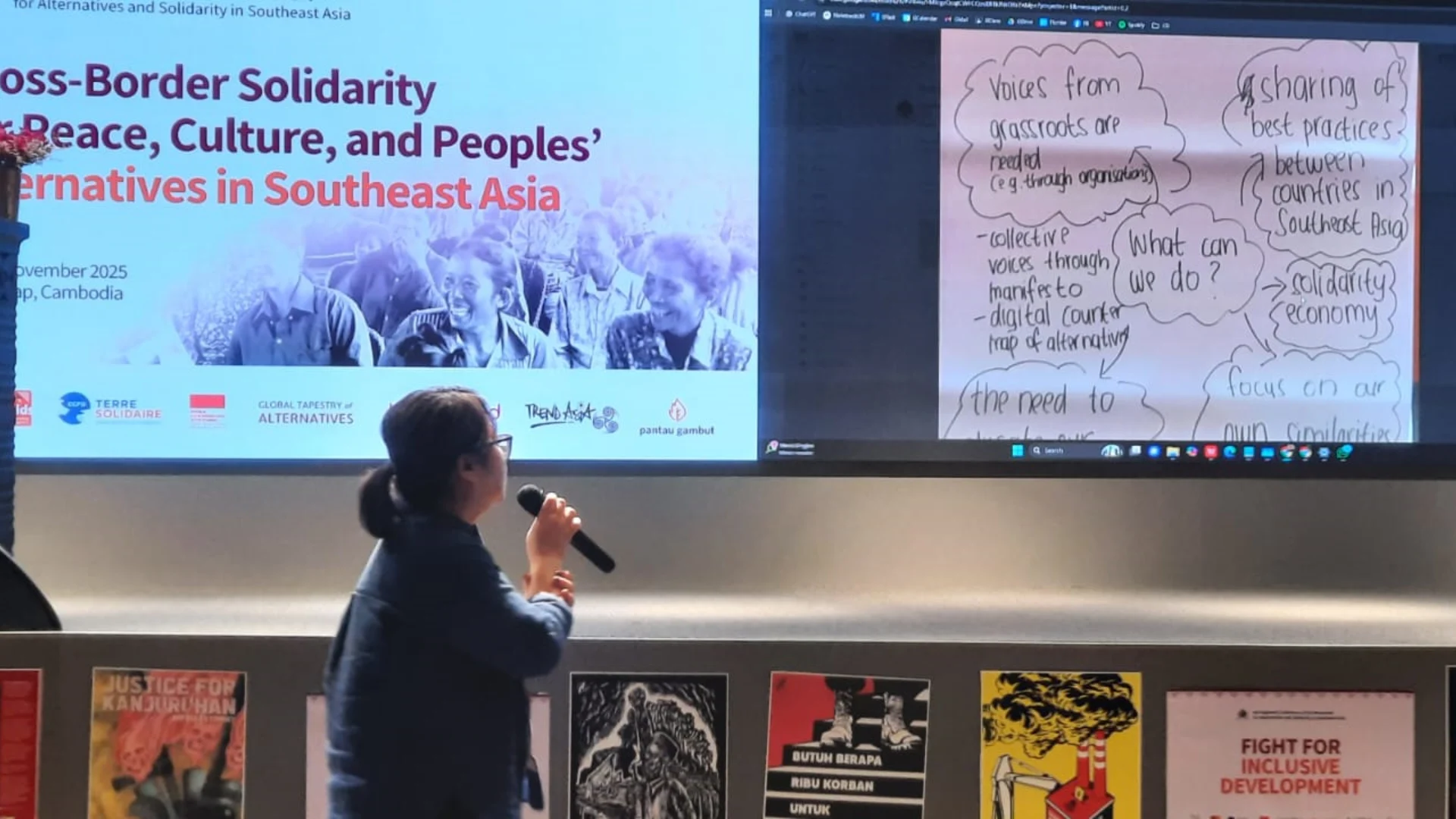
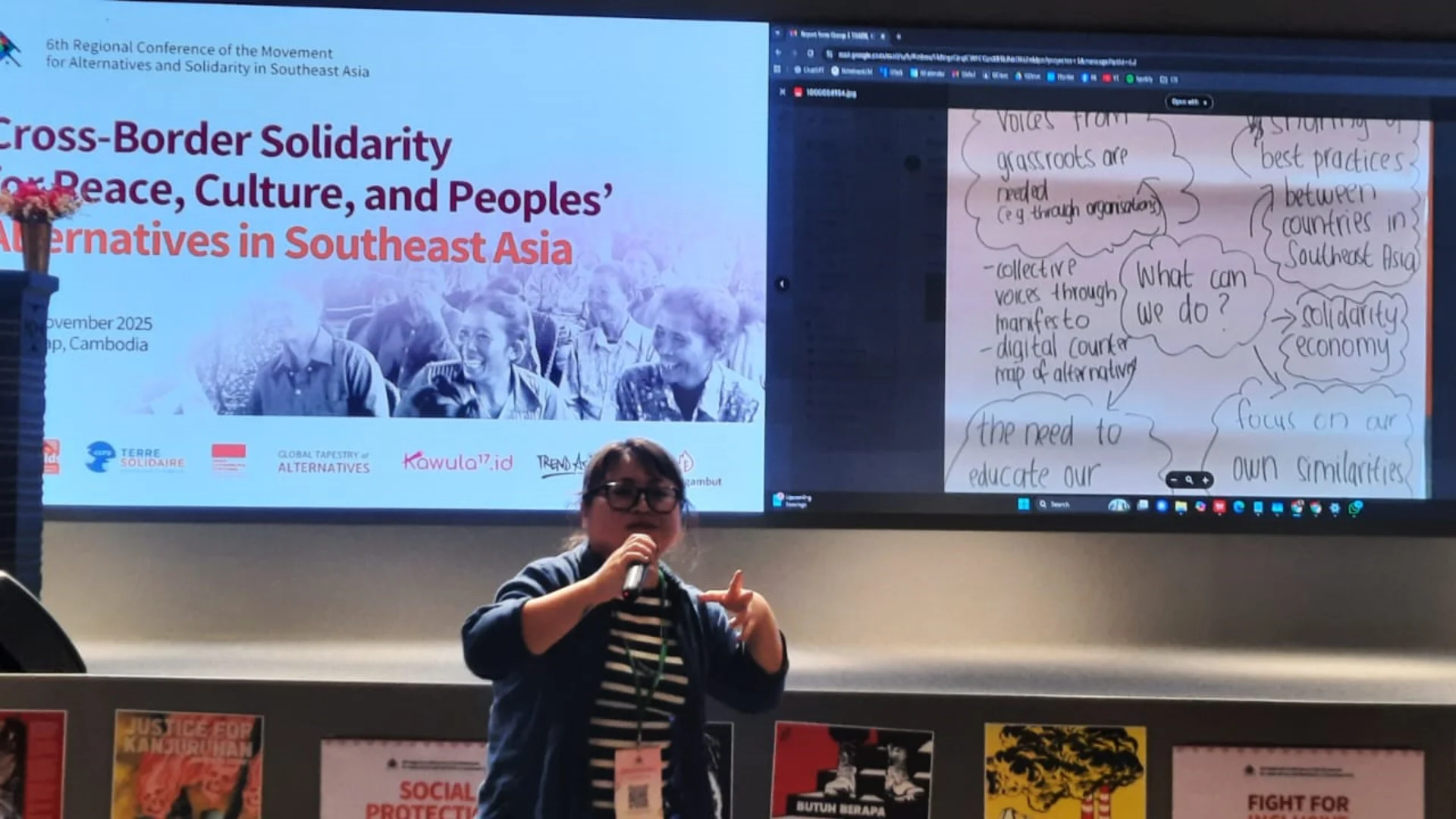
Mel later presented the group’s summary to the plenary session, highlighting the importance of people-to-people exchange in shaping a more inclusive regional identity.
Something unique – Meals at the Conference
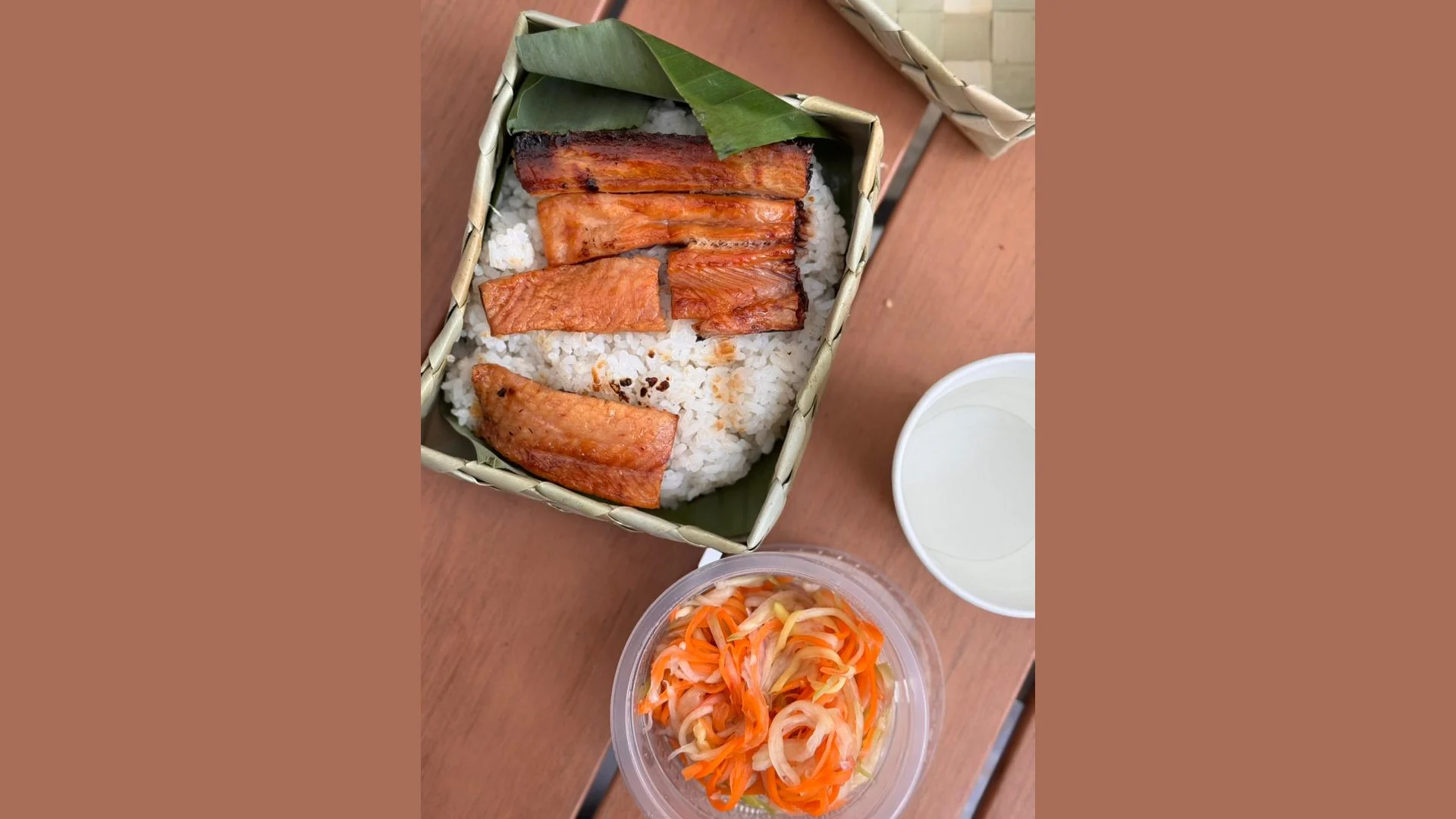
Throughout the conference, all meals were prepared by a collective of Khmer women survivors of human trafficking and gender-based violence. A simple box of rice and dried fish was distributed and it carried deeper meaning for these women — a reflection of resilience and the strength of collective recovery through community support.
Day 2 (12/11/2025
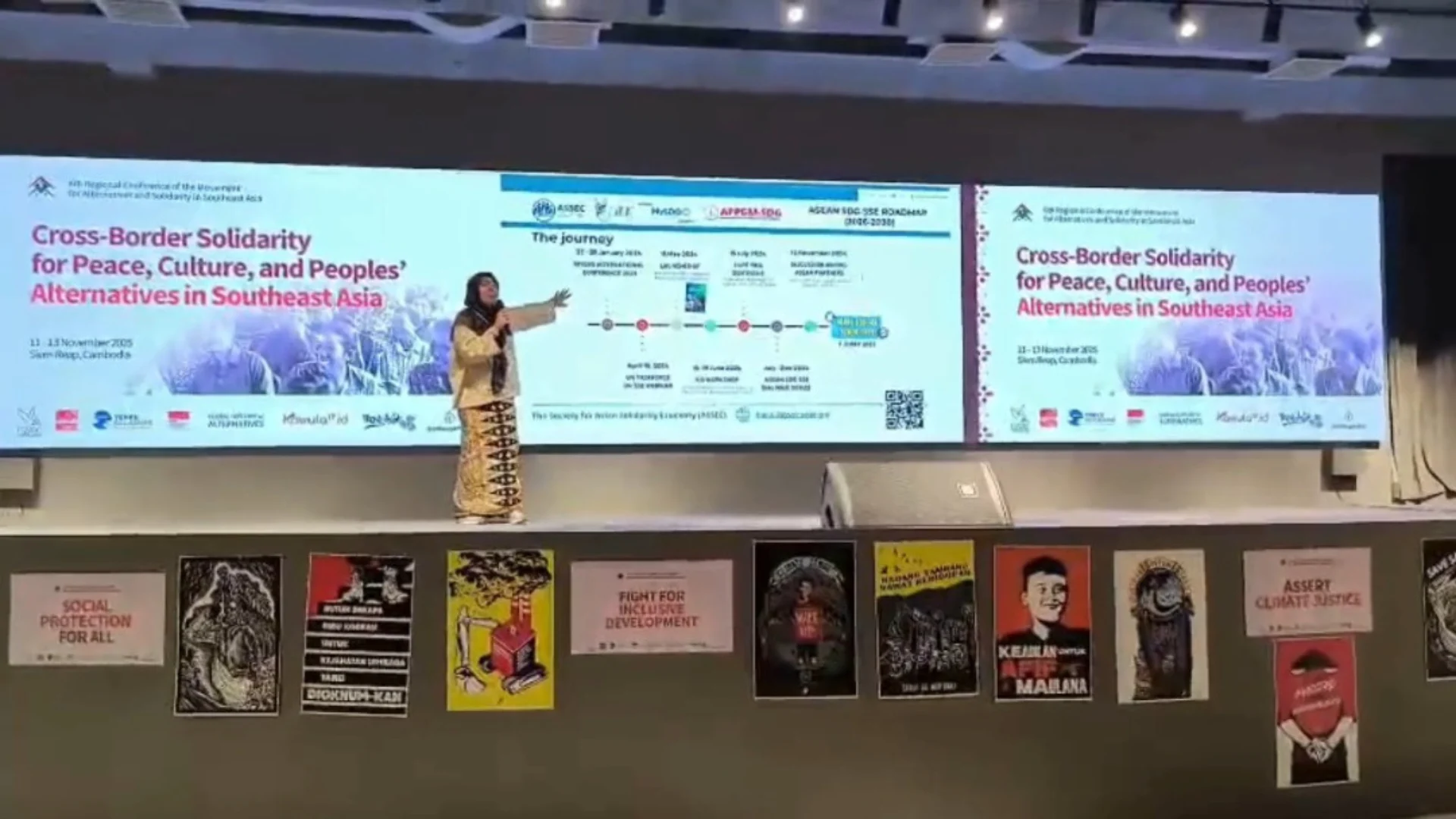
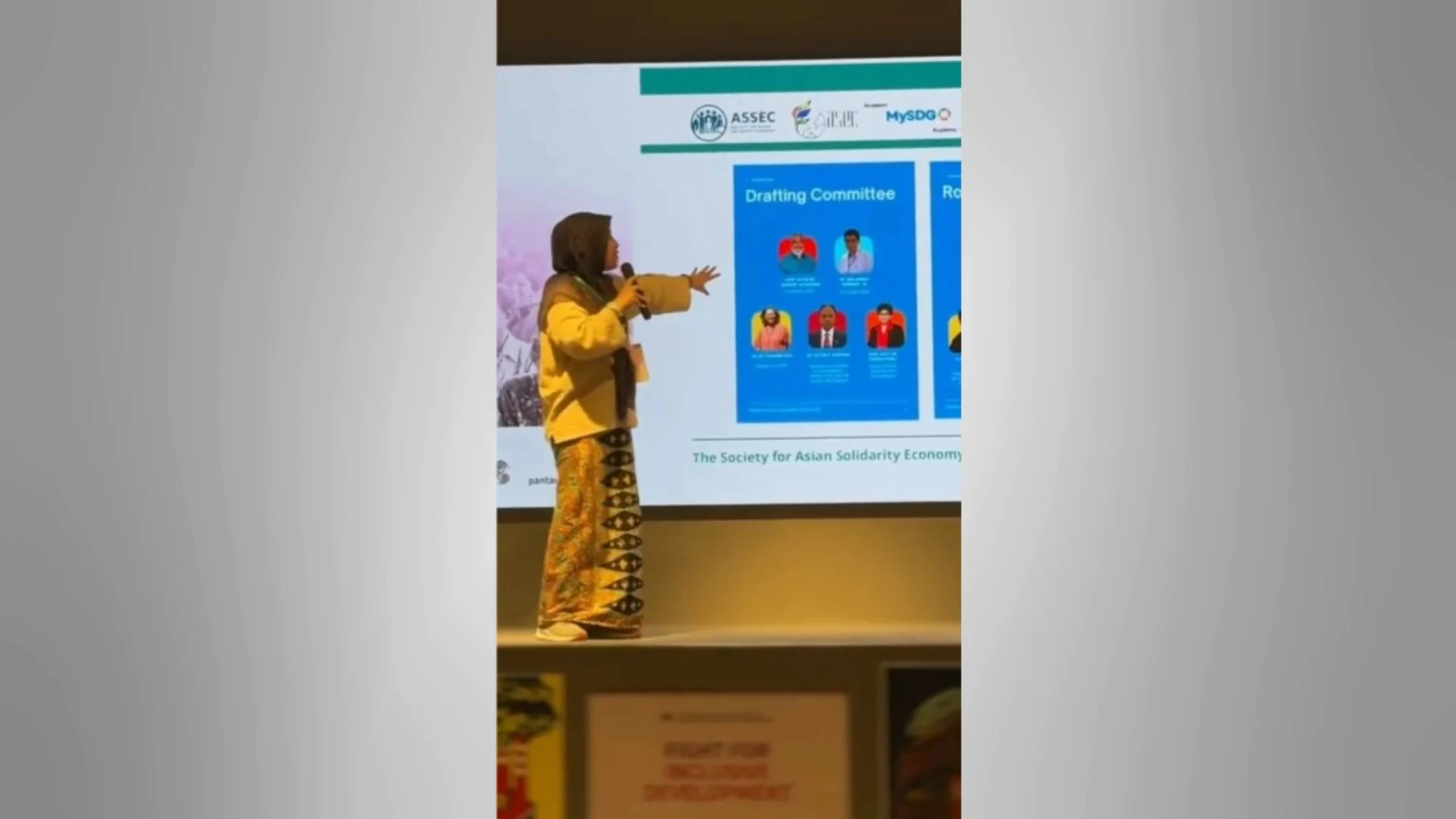
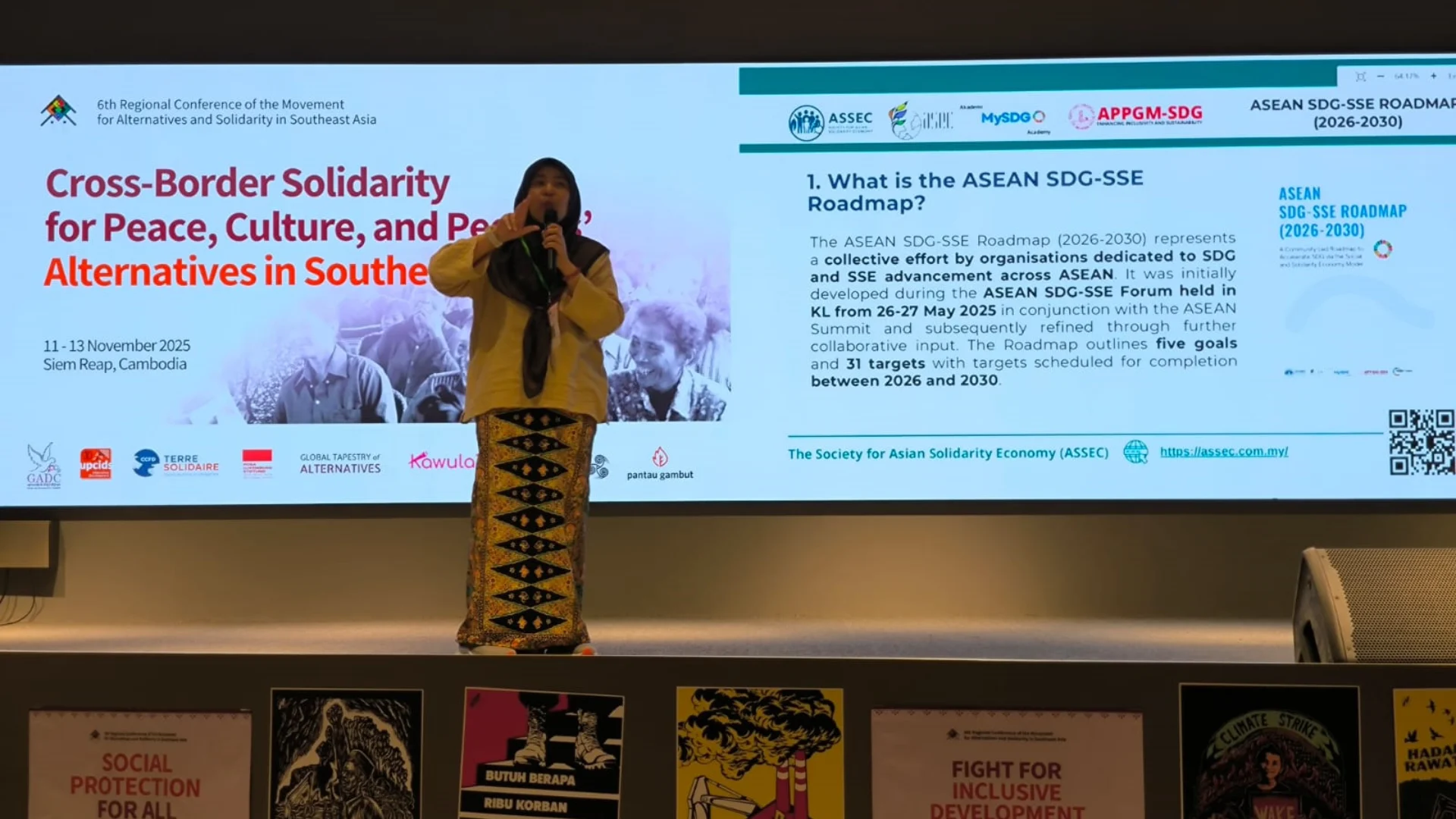
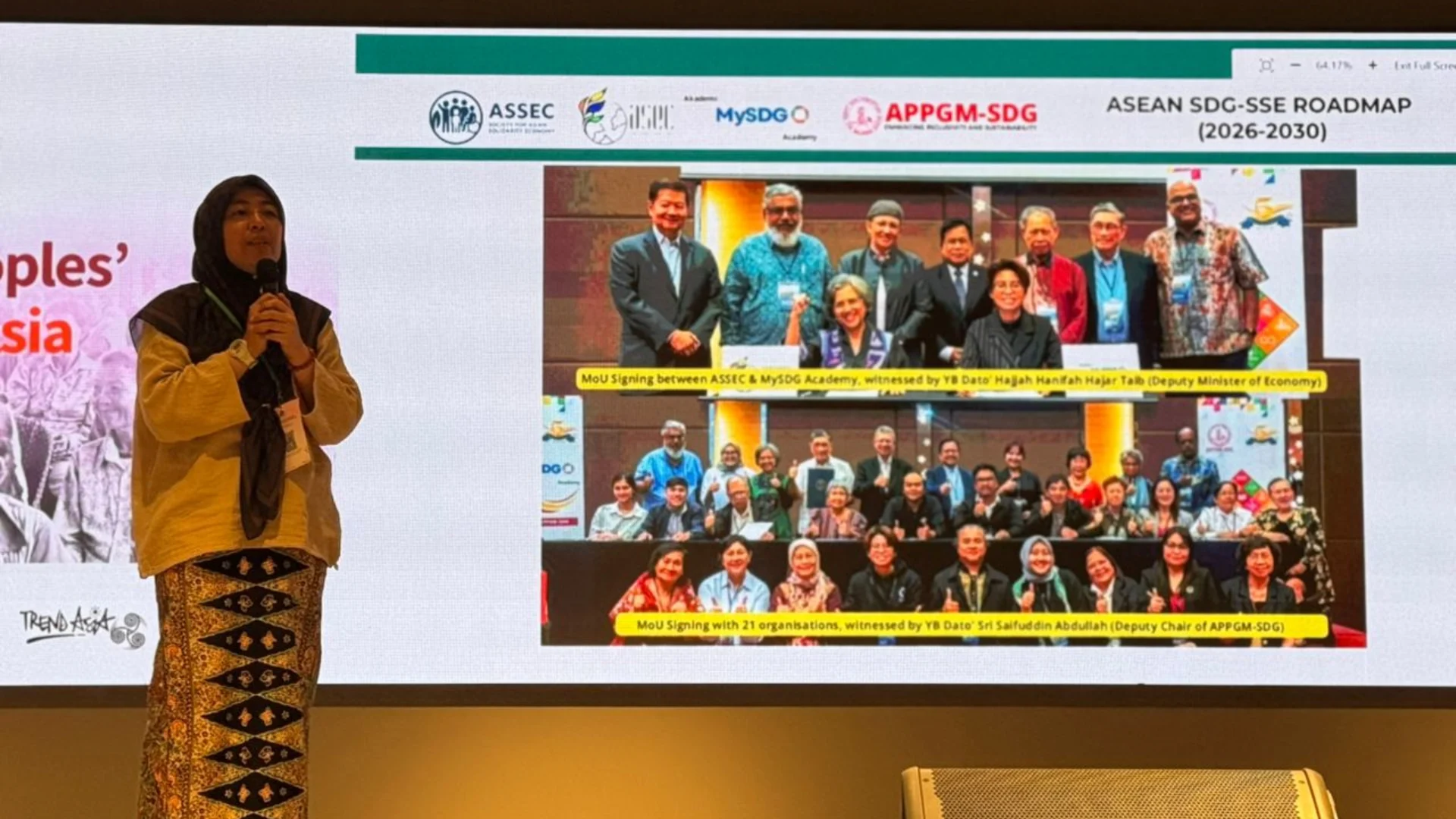
On the send day a key highlight was Hirza sharing and promoting the ASEAN SDG -SSE Roadmap and invited feedback from participants at the MASSA conference
Day 2 unfolded as a space charged with energy, reflection, and careful negotiation, where activists collectively imagined alternative regional integration and regionalism from the grassroots. The room buzzed with overlapping conversations: the scratch of pens on paper, quiet murmurs translating ideas across languages, occasional laughter, and pauses where participants listened intently to one another. Small groups worked through concrete and strategic questions—coordinating exchanges between communities, documenting local practices, designing community-led trainings, and planning MASSA’s future, including the development of a parcel of land donated by Serikat Petani Pasundan into a community-based academy to support the organisation’s mission.
Mel sat at the margins as an observer, notebook open, watching the choreography of voices and gestures. Histories of political struggle, state violence, displacement, and the legacies of colonialism and imperialism were woven into the conversation, shaping who spoke, who mediated, and how knowledge was valued and circulated. Participants recounted experiences of eviction, harassment, or community mobilisation; even when softened by translation, the intensity of these memories was palpable in the room.
Tensions occasionally surfaced—differences in priorities, approaches, or understanding of local realities—but these were negotiated with care, illustrating the delicate process of turning lived adversity into collective strategy. What emerged was a vivid portrait of resilience: activists drawing on trauma and marginalisation to craft practices of solidarity, to imagine alternative structures, and to build context-sensitive networks across Southeast Asia. Observing these interactions offered a rare and humbling window into how grassroots communities navigate histories of violence and marginalisation while striving to create spaces of cooperation, learning, and hope.
Day 3 (13/11/2025)
Hirza facilitated a session entitled “Moment 9: Museum Walk and Exhibit Session” which is a simultaneous presentation session by four transnational groups. The presentation session focused on plans and strategies for MASSA that were discussed earlier today.
Field visit – 78 Dam
Mel and Hirza also visited the Phnom Krom and Khlang Toek Tomnoub 78 communities. The dam called the 78 Dam, which was hand-dug during the Khmer Rouge era in 1978 is still sustaining 260 farmers and 5000 over Ha of rice fields. The dam lies at the center of community life, supporting biodiversity and anchoring generations who have farmed the land for centuries. Paddy fields are delineated through collective memory, with families managing land and water largely without government support, while corporations and private actors have created ongoing disputes over resources.
The community has endured repeated displacements and political and corporate pressures, including conflicts with authorities and oligarch owned military regaining portions of their land only after decades of struggle. Seed preservation remains central to their resilience, with over 200 types of local rice maintained across generations – where the seeds were shared amongst communities during a seed festival last month. With zero subsidies or input supports from the government, the communities themselves organised these efforts to be self sufficient and to not buy corporation produced rice seeds.
Mel commented “observing their practices highlighted how closely history, identity, and livelihood are tied to land and water, and how communities organise to sustain themselves amid historical and ongoing challenges”.
General reflections
Participation at conferences like this enable exposure to new partners as well as solidarity on thoughts for regional change. Both Mel and Hirza had a good experience with cultural exposure to Cambodia and in the interaction with other ASEAN participants the issues and challenges facing other countries. They both had opportunities to share their thoughts as well as learn from others.