
Dr Eri Trinurini, Chair ASEC (Asia Solidarity Economy Council), shares an outline of her recent talk on this key themese challenging dominant thoughts. She writes:-
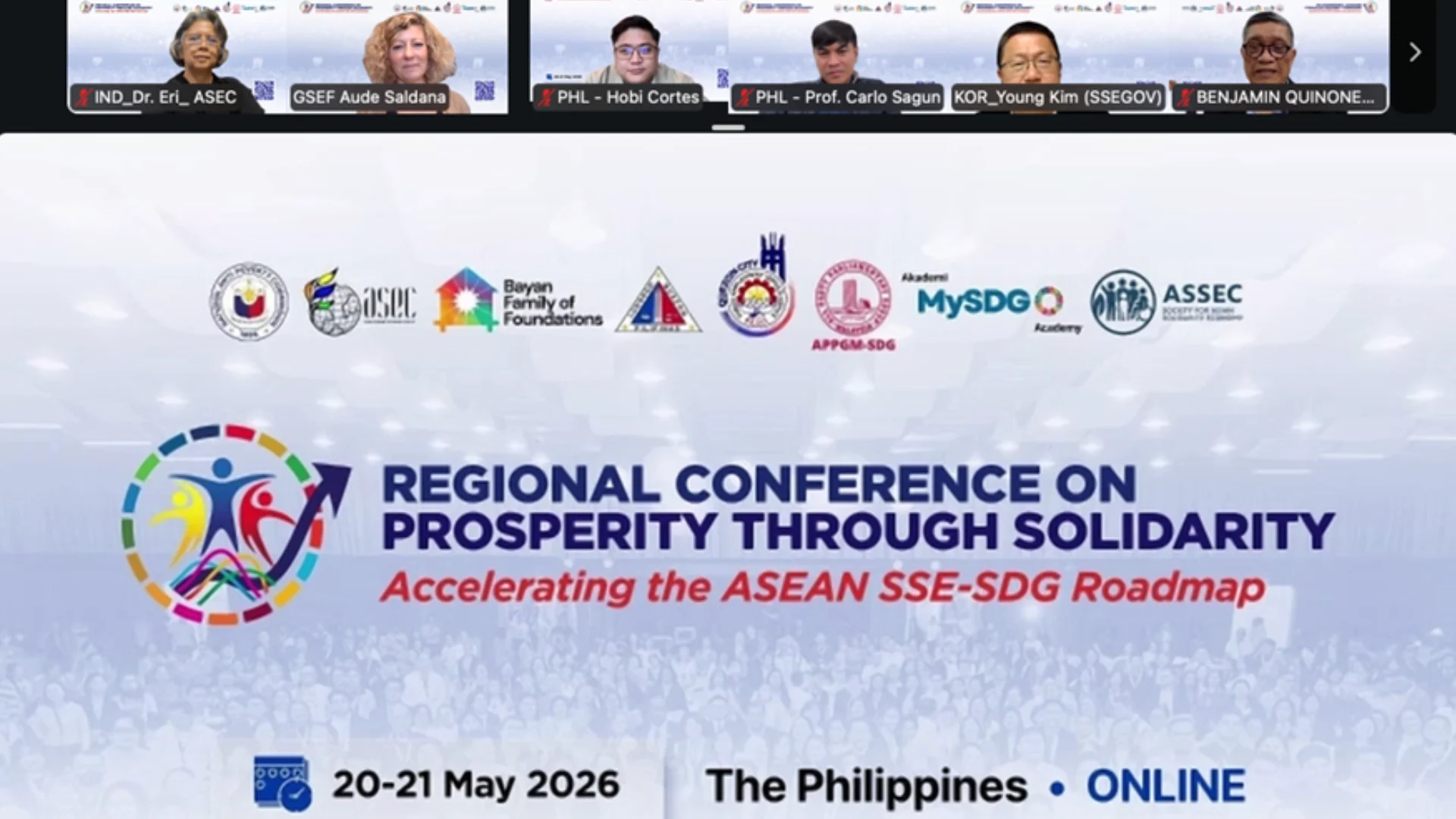
As part of the ASEAN SDG SSE Roadmap 2026-2030, which was initiated by the ASEC, a regional conference on Prosperity Through Solidarity was held online on May 20-212026 to advance the ASEAN SDG-SSE policy framework. The strategy has been adopted by the Philippines’ Ministry of Anti-Poverty, which has played an essential role as the conference’s host.
One of the interesting themes focused on the SSE and the care economy. The SSE and Care Economy frameworks have many comparable targeted outcomes, according to Prof. Amaryllis T. Torres, Philippine Representative, ASEAN. Commission on Women & Children
- Building a resilient and adaptable ASEAN that prioritizes people. Participatory and active community action that addresses both social and economic needs and interests.
- Improved economic opportunities for vulnerable groups, including women, people with disabilities, cultural minorities, and the elderly.
- Strengthen cross-sectoral cooperation and procedures to advance social and economic rights, empower individuals, promote inclusion, and ensure gender equality.
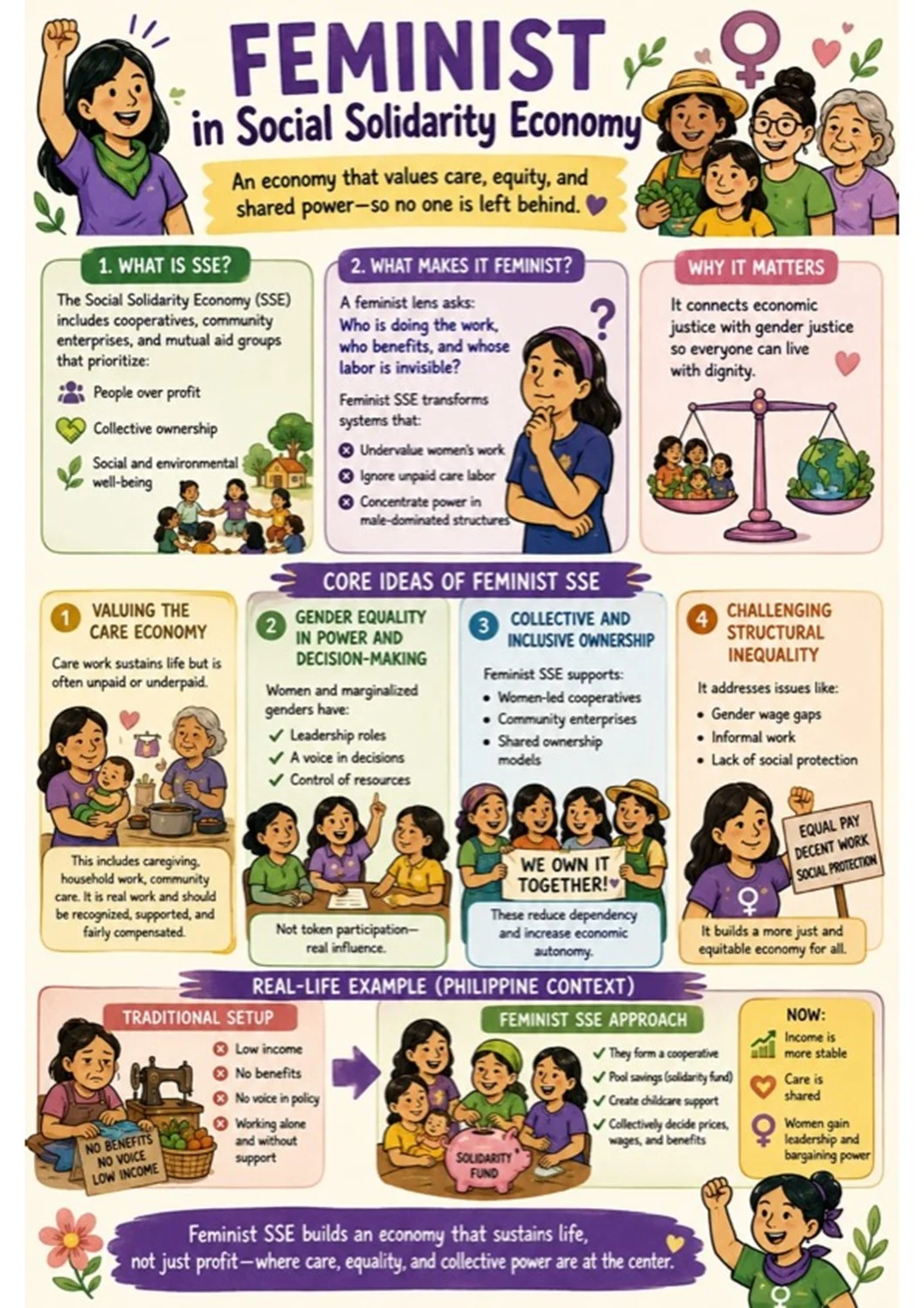
It is no surprise that SSE is also known as the “feminist SSE” for three reasons: changing conditions, critical perspectives, and having social justice foundations. Resource mobilization is essential for SSE survival and inclusive expansion (Dr. Nathalie Verceles, Professor, Department of Women and Development Studies, University of the Philippines),
- Public investment supports care services, transportation, training, and local businesses
- Accessible funding supports communal, social, and community-based projects.
- Building capacity for women’s leadership, digital access, and cooperative management.
- Improved statistics on women’s informal work and its impact on development.
Creatin an enabling environment in the ASEAN for Feminist SSE
- Foundational conditions
- Feminist SSE also needs an enabling environment—the legal policy, an institutional conditions that allow feminist SSE to thrive
- Feminist SSE also needs an enabling environment—the legal policy, an institutional conditions that allow feminist SSE to thrive
- Policy and Legal Framework
- Legal recognition of SSE and gender-responsive policy and budgeting
- Labor and social protections for informal and care workers
- Public procurement policies that support SSE enterprises
- Stronger participation of women and SSE actors in policy-making
- Strategic Partnership
- Building partnerships across government, civil society, cooperative and grassroots communities
Some References
Social and solidarity economy entities, including cooperatives, play a crucial role in addressing care needs.
Their people-centred and principle-based approach makes them particularly well-suited to providing inclusive, accessible, and high-quality care where other options may be limited.
Social and solidarity economy entities support a wide range of care needs—physical, psychological, cognitive, and developmental—serving children, adolescents, adults, older persons, persons with disabilities, and caregivers. By emphasizing democratic and participatory governance and stakeholder involvement—including care recipients, workers, families, and community members—social and solidarity economy entities create holistic care solutions tailored to beneficiaries.
This approach not only enhances care quality but also strengthens community ties and ensures sustainability, while promoting better working conditions, formalization, and professionalization among care workers.
The social and solidarity economy and the care economy
Feminist Economics and the Social and Solidarity Economy By Suzanne Bergeron
(University of Michigan, Dearborn)
Feminist economics (FE) is a wide-ranging field of scholarship that aims to challenge the gender biased frameworks of economic theories, and create knowledge for a more just, sustainable world while bringing broader transdisciplinary visions into the picture.
While it shares many common ideas and values with the SSE and offers key insights that can further the goals of the SSE, there has not been significant engagement between the two approaches. In this entry, I highlight key analytical insights from feminist economics that have relevance for the SSE and trace out the connections.
While, for many years, SSE has been somewhat gender blind in its approach, it is heartening to see an emerging literature bringing an explicit FE analysis to understanding SSE activities and processes. Continued engagement between FE and SSE is crucial to understanding the conditions under which inclusive, gender-equitable SSE processes can foster democratic participation, cooperative governance and social provisioning for the well-being of all people and the planet.
Feminist Economics and the Social and Solidarity Economy