
From Measurement to Transformation: Reimagining Social Impact Assessment for the Social and Solidarity Economy in ASEAN
By Paniirselvam Jayaraman, APPGM-SDG Secretariat
The Social and Solidarity Economy (SSE) has emerged as a critical pathway towards inclusive, sustainable, and people-centred development across ASEAN. Yet, one fundamental question continues to challenge policymakers, social enterprises, civil society organisations, and development practitioners alike: How do we know that SSE initiatives are truly creating meaningful impact?
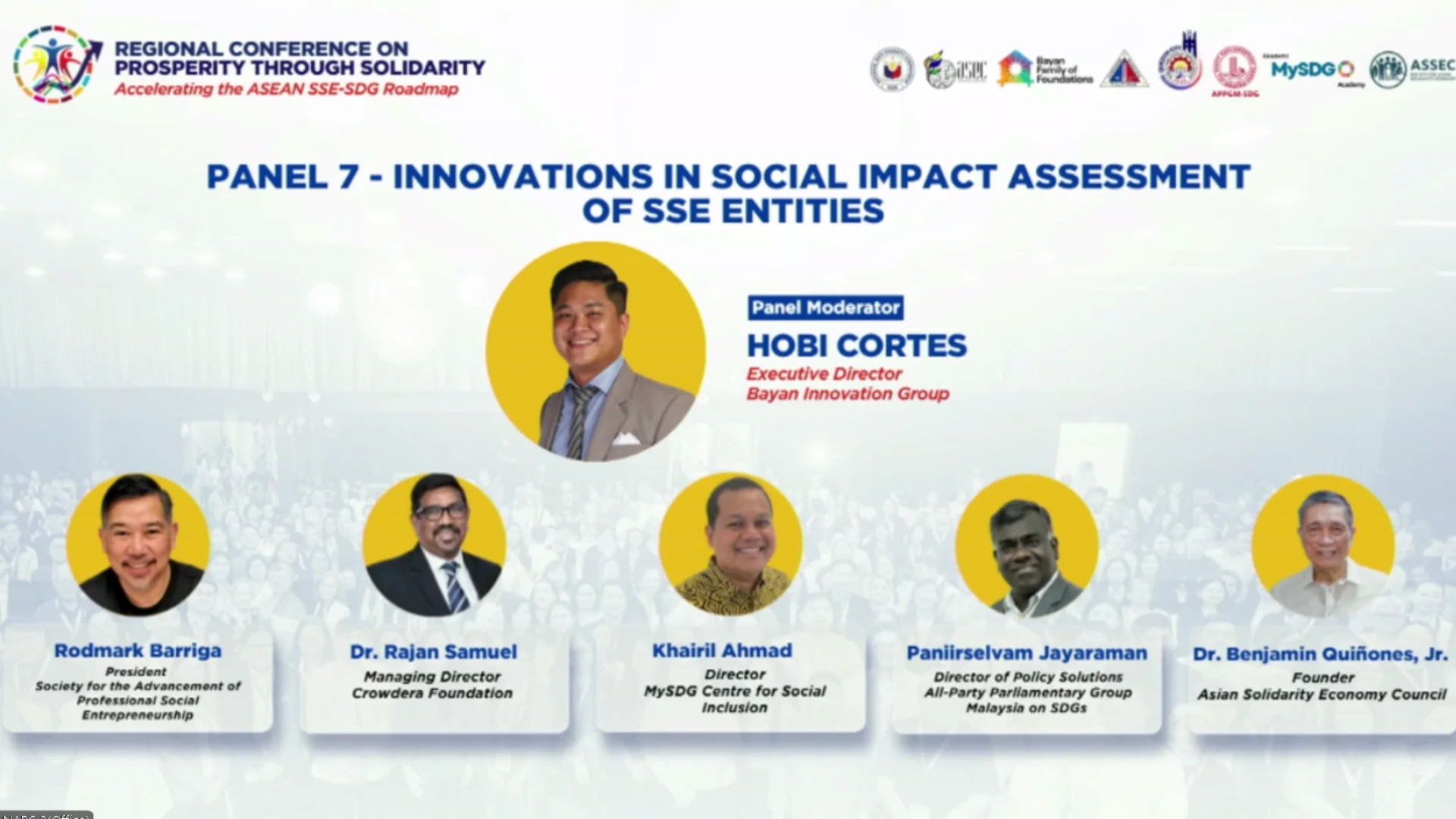
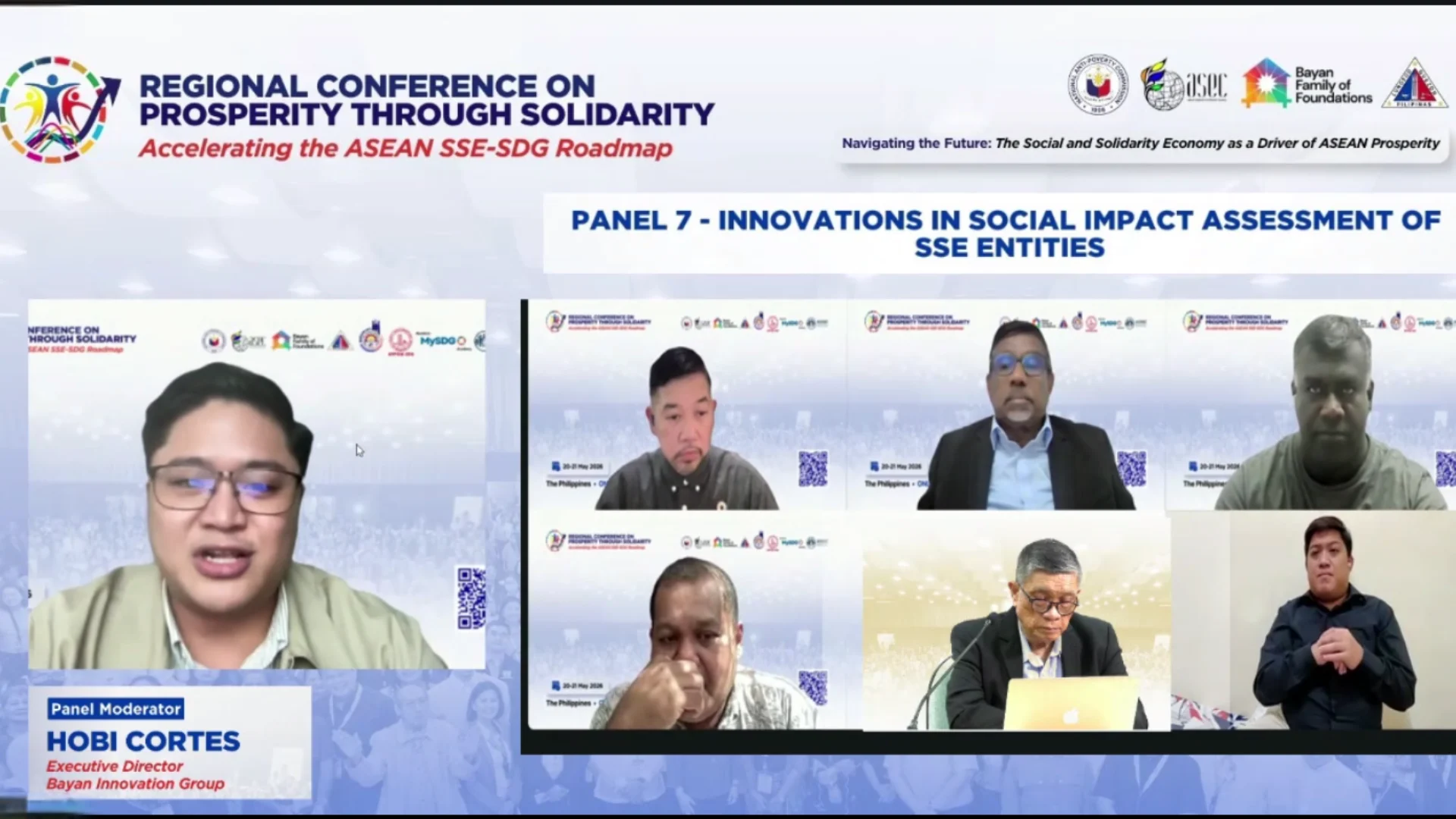
This question formed the basis of Panel 7, “Innovations in Social Impact Assessment for SSE Entities,” during the Regional Conference on Prosperity through Solidarity: Accelerating the ASEAN SSE-SDG Roadmap. Moderated by Hobi Cortes, Executive Director of Bayan Innovation Group. The discussion highlighted a growing consensus that social impact assessment must move beyond compliance reporting and become a strategic tool for empowerment, accountability, policy influence, and sustainable transformation.
Measuring What Truly Matters
Opening the discussion, Dr. Benjamin Quiñones Jr., Co-Founder of the Asian Solidarity Economy Council, challenged traditional approaches to impact measurement that rely heavily on economic and financial indicators.
He introduced a Social Impact Assessment Framework built around five interconnected domains: Economic Impact, Social Impact, Financial Impact, Environmental Impact, and Peace Impact. The framework seeks to provide a more comprehensive understanding of how SSE entities contribute to community wellbeing and sustainable development.
According to Dr. Quiñones, no single organisation can create impact across all domains independently. Instead, meaningful development outcomes are often the result of collaboration among government agencies, private sector actors, civil society organisations, and local communities. As such, social impact assessment should recognise the collective contributions of multiple stakeholders rather than focusing solely on individual organisations.
The framework was designed not only to establish baseline indicators and align with Sustainable Development Goals (SDGs), but also to support adaptive learning, transparency, strategic decision-making, and long-term sustainability.
Malaysia’s Experience in Participatory Impact Assessment
Building on this foundation, Dr. Khairil Ahmad shared Malaysia’s experience in institutionalising impact assessment through the work of the All-Party Parliamentary Group Malaysia on Sustainable Development Goals (APPGM-SDG).
He highlighted a persistent challenge faced by many countries: the absence of a unified national framework for measuring social impact. While Malaysia has begun developing impact measurement toolkits for social enterprises, much of the current assessment process remains fragmented and largely self-reported.
To address this gap, APPGM-SDG has pioneered a community-generated data approach that places local communities at the centre of evidence generation. Through extensive field research, issue mapping exercises, project implementation, and independent evaluations, APPGM-SDG has developed a model that captures both quantitative and qualitative dimensions of development.
The organisation’s methodology begins with identifying local socioeconomic challenges through direct engagement with communities. These findings are translated into targeted interventions, followed by systematic monitoring and impact evaluation. Assessment goes beyond measuring financial outcomes to include changes in community wellbeing, stakeholder relationships, gender inclusion, and awareness of the Sustainable Development Goals.
Dr. Ahmad emphasised that impact assessment should also be applied to public policies. Through the monitoring of Malaysia’s Thirteenth Malaysia Plan, APPGM-SDG is mobilising community networks across the country to assess whether national policies are producing meaningful improvements at the grassroots level.
Connecting Grassroots Communities to National Policymaking
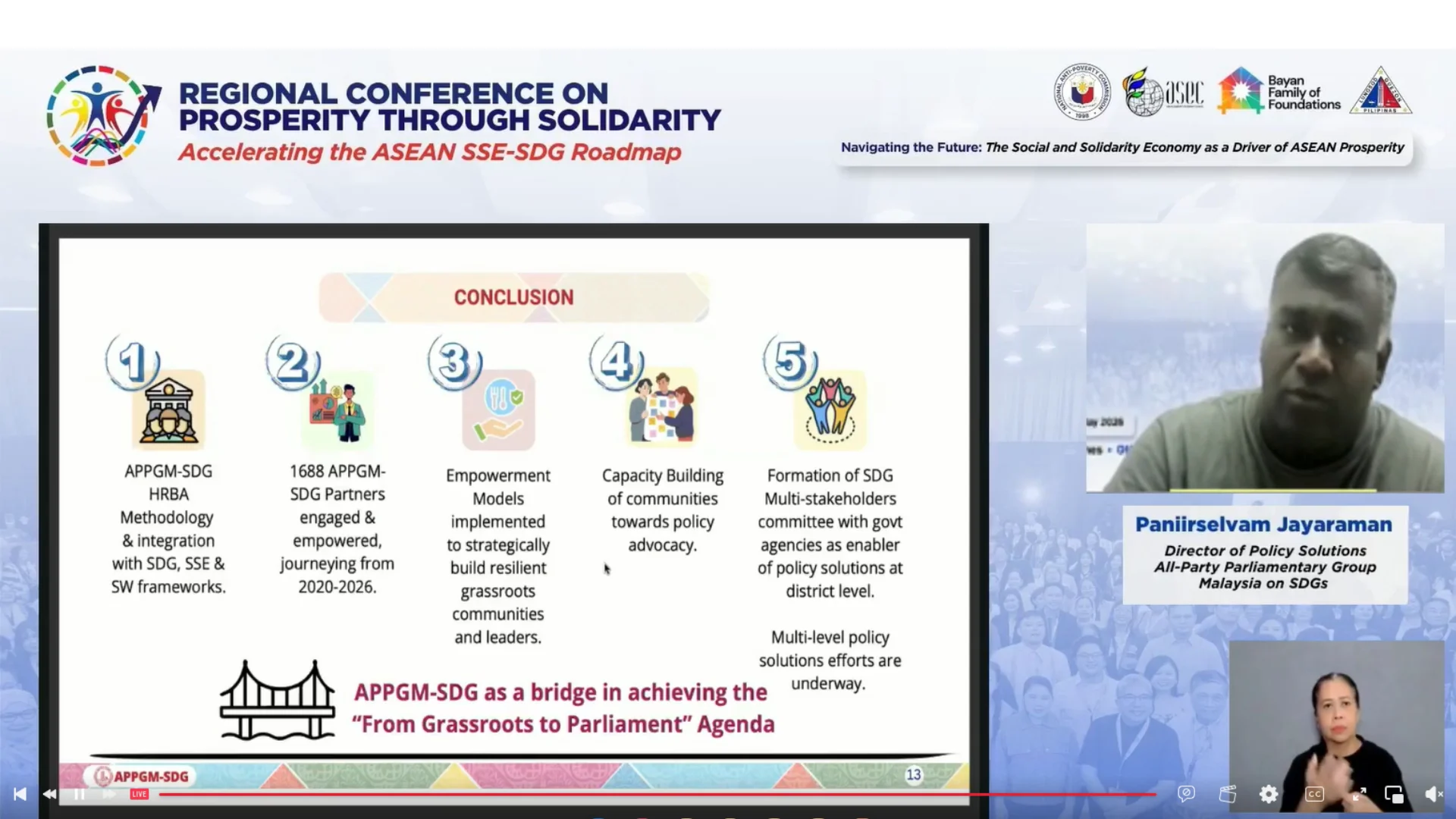
Expanding on the Malaysian model, Paniirselvam Jayaraman, Director of Policy Solutions at APPGM-SDG Malaysia, demonstrated how social impact assessment can become a powerful mechanism for bridging the gap between local realities and national policymaking.
He argued that development is fundamentally about expanding freedoms and opportunities for people to live dignified lives. Since a significant proportion of SDG implementation occurs at local and regional levels, communities must be actively involved in shaping development solutions.
Through APPGM-SDG’s Policy Solutions Initiative, a structured ecosystem has been created to connect grassroots communities, local leaders, government agencies, researchers, parliamentarians, and policymakers. The initiative operates through six levels of policy engagement, ranging from district-level discussions to national parliamentary platforms.
At the heart of this model is the use of Human Rights-Based Approaches (HRBA), SDG frameworks, Social and Solidarity Economy principles, and social work methodologies. Community concerns are identified through participatory research and issue-mapping exercises before being elevated through district-level SDG Committees that bring together multiple stakeholders to jointly design solutions.
One notable example involved an indigenous community that had struggled for over two decades with unresolved issues relating to land rights, taxation obligations, and livelihood opportunities following relocation from their ancestral lands. Through multi-stakeholder dialogue facilitated by district-level SDG Committees, long-standing barriers were addressed, demonstrating the potential of participatory governance mechanisms to generate tangible outcomes.
Today, APPGM-SDG’s Policy Solutions model operates across 63 administrative districts in Malaysia and involves more than 1,600 local leaders and volunteers working as community champions, policy advocates, and monitoring agents.
Harnessing Technology for Impact Measurement
The discussion then shifted to the role of technology in strengthening impact assessment systems.
Dr. Rajan Samuel of Crowdera Foundation highlighted the rapid growth of digital infrastructure, artificial intelligence, and online fundraising technologies and their implications for social impact measurement.
He emphasised that social impact assessment should be viewed through the lens of value creation and leverage. Organisations invest significant resources into community development initiatives, and stakeholders increasingly expect evidence demonstrating the return on those investments.
Technology, he argued, provides opportunities to collect, analyse, and communicate impact data more efficiently. Digital platforms can facilitate real-time monitoring, automate data collection, improve transparency, and enable organisations to make informed decisions based on evidence.
Artificial intelligence is also transforming fundraising and resource mobilisation by helping organisations optimise outreach efforts, personalise engagement strategies, and increase operational efficiency. However, Dr Samuel cautioned that technology should simplify rather than complicate impact measurement processes. The ultimate goal is not merely to generate more data but to ensure that relevant information reaches the right people at the right time for decision-making.
Towards a More Human-Centred Approach to Impact
A recurring theme throughout the panel was the need to ensure that impact assessment remains rooted in community experiences and aspirations.
The speakers agreed that conventional measurement frameworks often overlook dimensions of well-being that matter most to people. Economic indicators alone cannot capture social cohesion, dignity, empowerment, environmental stewardship, or peace.
Effective social impact assessment therefore, requires communities to play an active role in defining what success looks like. Rather than imposing externally designed metrics, assessment frameworks should emerge from local realities, cultural contexts, and community priorities.
This approach not only improves the relevance and legitimacy of assessment processes but also strengthens community ownership of development initiatives.
Key Lessons for ASEAN
The panel concluded with several important lessons for strengthening the ASEAN SSE ecosystem.
First, social impact assessment must move beyond narrow financial metrics towards more holistic frameworks that recognise multiple dimensions of value creation.
Second, governments and development partners must strike a balance between methodological rigour and accessibility. Assessment tools should be credible enough to inform policy and investment decisions while remaining practical for grassroots organisations with limited technical resources.
Third, impact measurement should be participatory by design. Communities are not merely beneficiaries but essential partners in defining, monitoring, and evaluating development outcomes.
Fourth, stronger collaboration among governments, civil society organisations, social enterprises, academia, and local communities is essential for generating meaningful evidence and scaling successful models.
Finally, ASEAN countries have an opportunity to develop shared principles and regional frameworks that strengthen comparability, learning, and cooperation across borders while respecting local contexts.
Conclusion
The panel demonstrated that social impact assessment is far more than a technical exercise. It is a process of understanding how lives are changing, how communities are being empowered, and how development interventions contribute to broader societal transformation.
As ASEAN advances the implementation of the SSE-SDG Roadmap, the future of impact measurement will depend not only on better indicators and technologies but also on stronger partnerships, participatory governance, and a commitment to placing communities at the centre of development.
The message from the panel was clear: social impact should not be measured solely by what organisations deliver, but by how people’s lives improve, how communities become more resilient, and how development becomes more inclusive and sustainable for all.