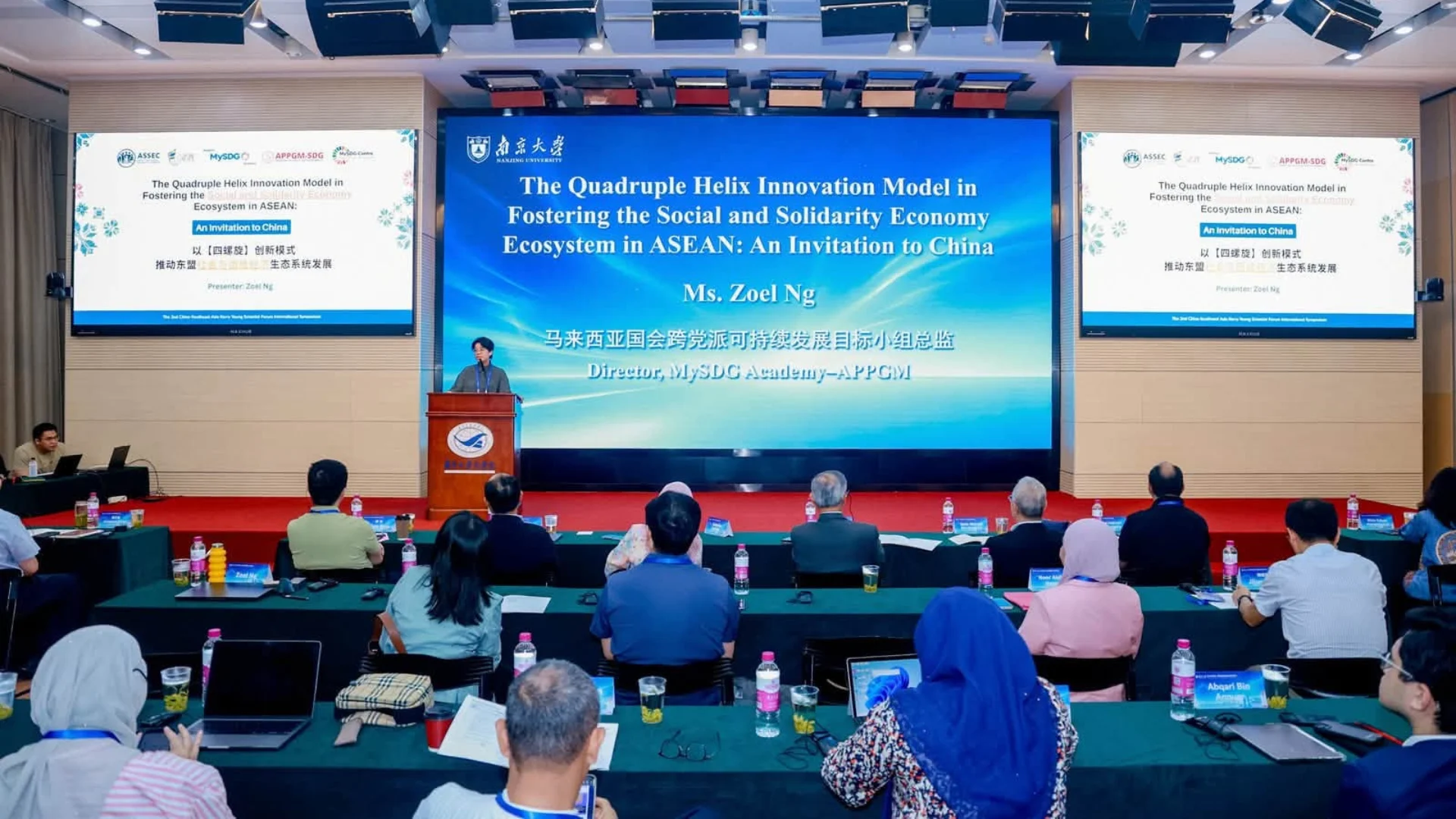

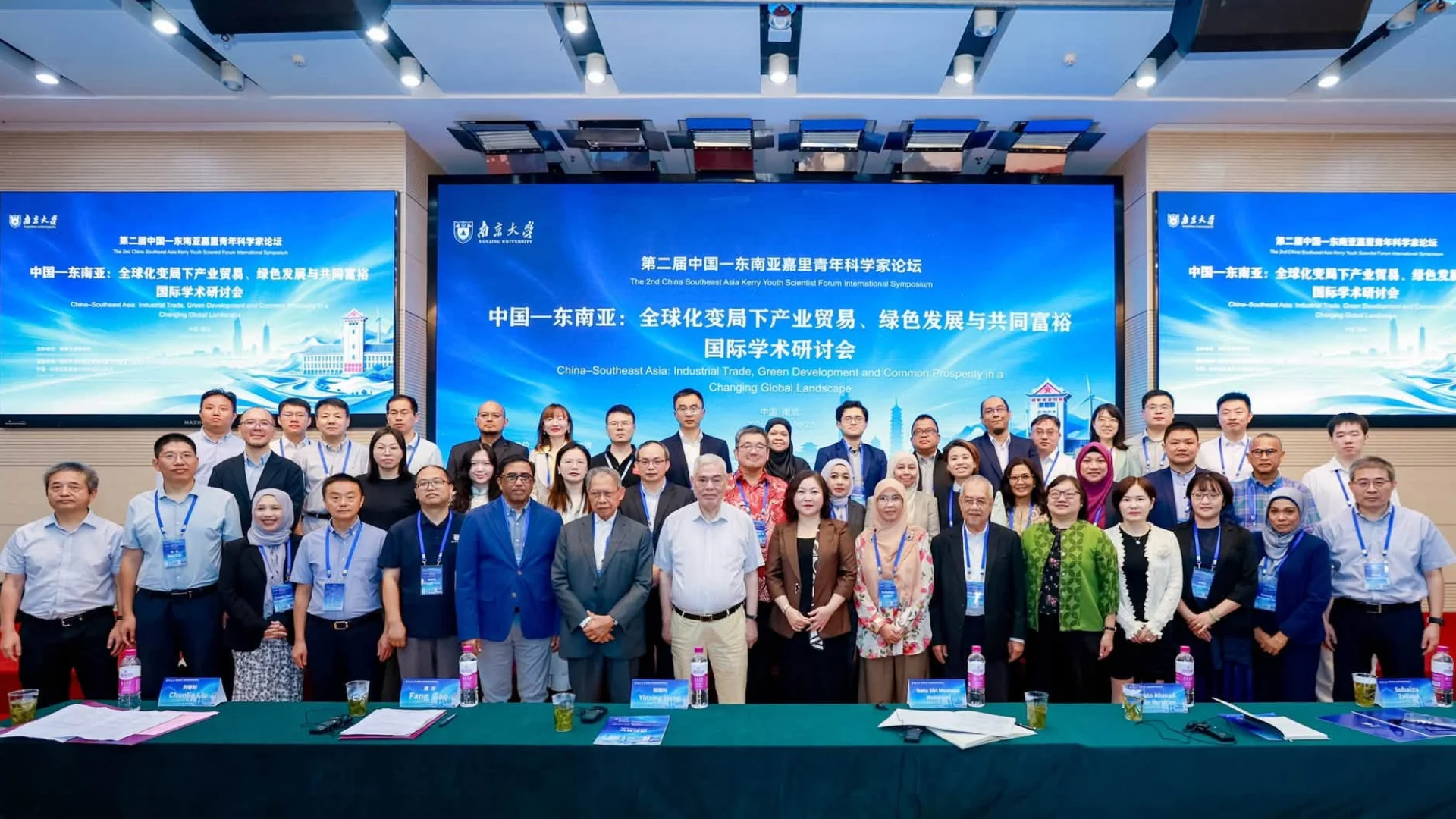
Ms Zoel Ng of MySDG Academy participated at the 2nd China–Southeast Asia Kerry Young Scientist Forum International Symposium, held at Nanjing University, China from 21–23 August 2026. Here she presented a paper entitled “The Quadruple Helix Innovation Model in Fostering the Social and Solidarity Economy Ecosystem in ASEAN. This presentation brought to light the work of the ASEAN SDG-SSE Roadmap (2026–2030).
In so doing brought this ASEAN theme into the wider Chinese awareness with the potential of fostering a China–ASEAN academic dialogue as well as an exploration of how -government, academia, industry and civil society can work together to strengthen inclusive and sustainable economic ecosystems.
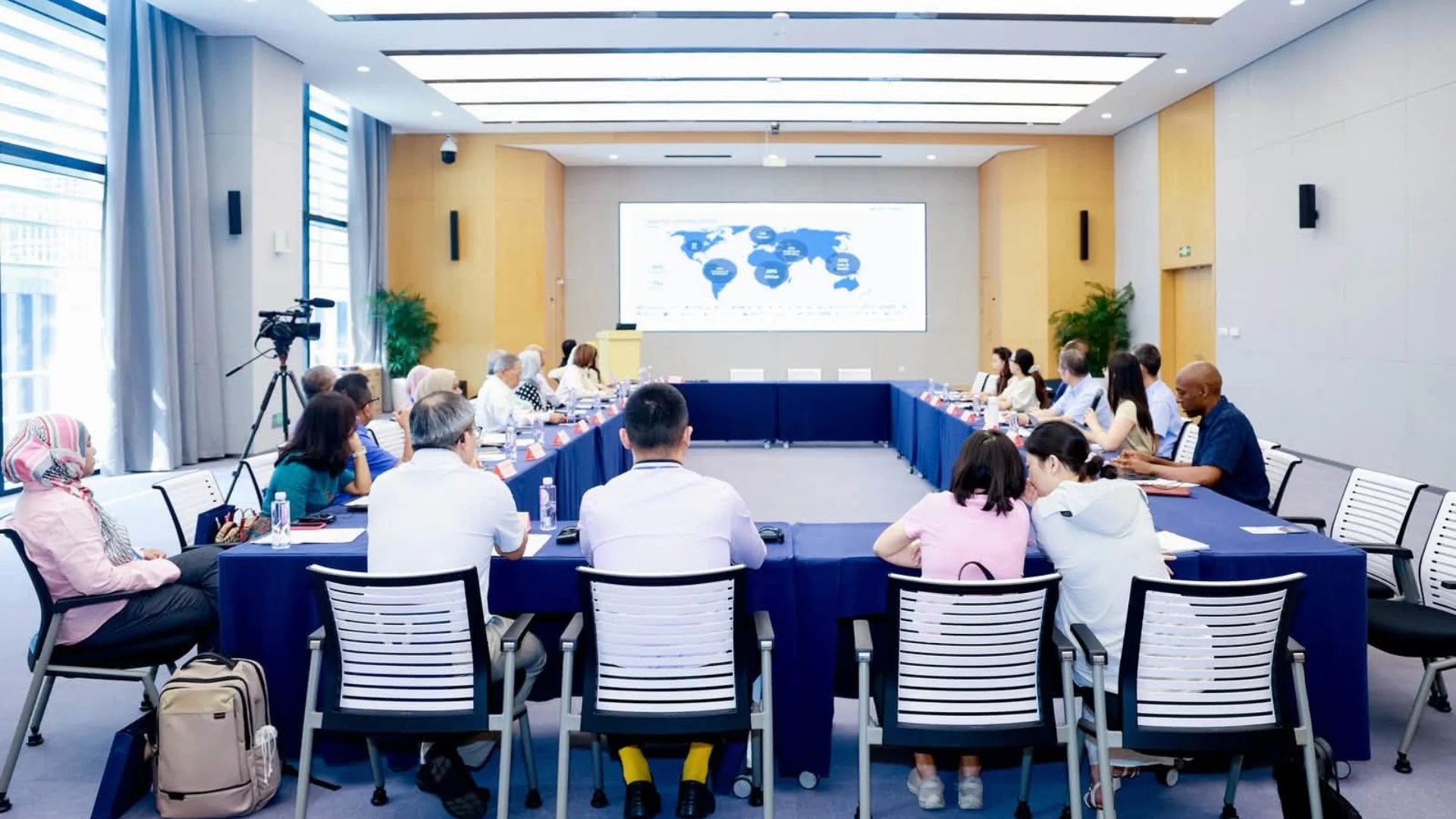
The international symposium brought together 49 experts and scholars from China and Malaysia at Nanjing University. Discussion over three days covered inclusive growth, global supply-chain restructuring, digitalisation, industrial development and new models for China–Malaysia cooperation.
Within this broader economic conversation, Ms Zoel Ng’s presentation introduced Social and Solidarity Economy as an alternative economic paradigm centred on people, communities and sustainable development.
Drawing on the International Labour Organization’s 2022 resolution, SSE encompasses enterprises, organisations and other entities that pursue collective or general interests through principles including voluntary cooperation, mutual aid, participatory governance, autonomy and the primacy of people and social purpose over capital.
For ASEAN, this is not simply an abstract economic idea. Cooperatives, community organisations, associations, social enterprises, self-help groups, informal worker networks and grassroots movements already form an important part of the region’s economic and social fabric. The challenge is therefore not merely to create more individual social enterprises, but to build an enabling ecosystem in which these actors can participate meaningfully in development.
This objective rest at the heart of ASSEC’s work. Since its establishment, ASSEC has sought to bring together practitioners and thought leaders across ASEAN around grassroots development, SDG localisation and solidarity-based economic approaches, with particular attention to communities often left behind.
Why the Quadruple Helix matters
A central proposition presented in Nanjing was that building a strong SSE ecosystem requires moving beyond fragmented interventions.The Quadruple Helix Innovation Model connects four critical actors:
Government + Academia + Industry + Civil Society
Earlier innovation models frequently focused on relationships between governments, universities and industry. The Quadruple Helix expands this architecture by recognising society and civil society as active participants in innovation and development.
For SSE, this fourth helix is particularly important. Community organisations should not merely be treated as beneficiaries at the end of a development programme. They possess lived experience, social networks, local knowledge and implementation capacity that can help shape solutions from the beginning.
When the four helices interact effectively, different forms of resources can reinforce one another:
- government creates enabling policy, financing and institutional support;
- academia contributes research, education, evidence and incubation;
- industry provides markets, entrepreneurship and product development; and
- civil society contributes community knowledge, mobilisation, legitimacy and social innovation.
The result can generate a spillover and flywheel effect, where collaboration creates additional partnerships, capabilities and innovations beyond any single project.
Malaysia’s own policy direction provides increasing relevance for such an approach. The presentation highlighted the 13th Malaysia Plan (2026-2030) , which explicitly references the Quadruple Helix model as a mechanism for promoting innovation in resource management.
ASEAN already offers practical examples
The presentation demonstrated that elements of this ecosystem already exist throughout Southeast Asia.
Examples included academic and youth incubation initiatives involving Quezon City University in the Philippines ; action research by the Institute of Asian Studies, Chulalongkorn University ; the development of fair and sustainable market channels for home-based workers through HomeNet Thailand Brand ; and grassroots organising and cooperative development through Serikat Petani Pasundan in Indonesia .
These initiatives demonstrate an important principle: SSE develops most effectively when policy, knowledge, markets and communities reinforce one another .
This is also the systems approach underlying the ASEAN SDG-SSE Roadmap (2026–2030) , which seeks to strengthen grassroots participation, democratic governance, SDG localisation, partnerships, evidence systems, market development, financing and solidarity among SSE communities across ASEAN.
An invitation to China
This presentation concluded not simply with observations, but with an invitation. China and ASEAN possess extensive economic, academic and institutional relationships. The next opportunity is to complement conventional trade and investment cooperation with deeper collaboration around inclusive development, community innovation and sustainable local economies .
Two initial areas were proposed:
- Collaborative research between universities and institutions in China, Malaysia and ASEAN on SSE, community development and inclusive economic models.
- Joint case-study development documenting successful models of shared prosperity and community-based economic development across China and Southeast Asia.
The official forum report similarly noted the potential for stronger cooperation between China and Southeast Asia and specifically highlighted the presentation’s call for joint research and community projects with Nanjing University.
From presentation to continuing dialogue
One encouraging outcome was how the Quadruple Helix framing resonated beyond the presentation itself. In a reflection following the session, Professor Dato’ Dr Ahmad Ibrahim described the model as a practical way of ensuring that communities are no longer outside the economic decision-making process. His reflection highlighted the importance of civil society as the fourth component connecting public policy, business and academia with the people who experience economic policies directly.
He further observed that ASEAN’s traditions of mutual cooperation provide fertile ground for this approach, suggesting that the Quadruple Helix can provide a contemporary institutional structure for values already deeply rooted within many Asian communities.
As the ASEAN SDG-SSE Roadmap moves forward, ASSEC and its partners will continue creating spaces where governments, researchers, businesses and civil society can work together to demonstrate that economic development can simultaneously generate prosperity, strengthen communities and advance the Sustainable Development Goals. The invitation remains open: to build an economy where communities are not simply beneficiaries of development, but active architects of it.
By MySDG Academy (Aug 25, 2026)