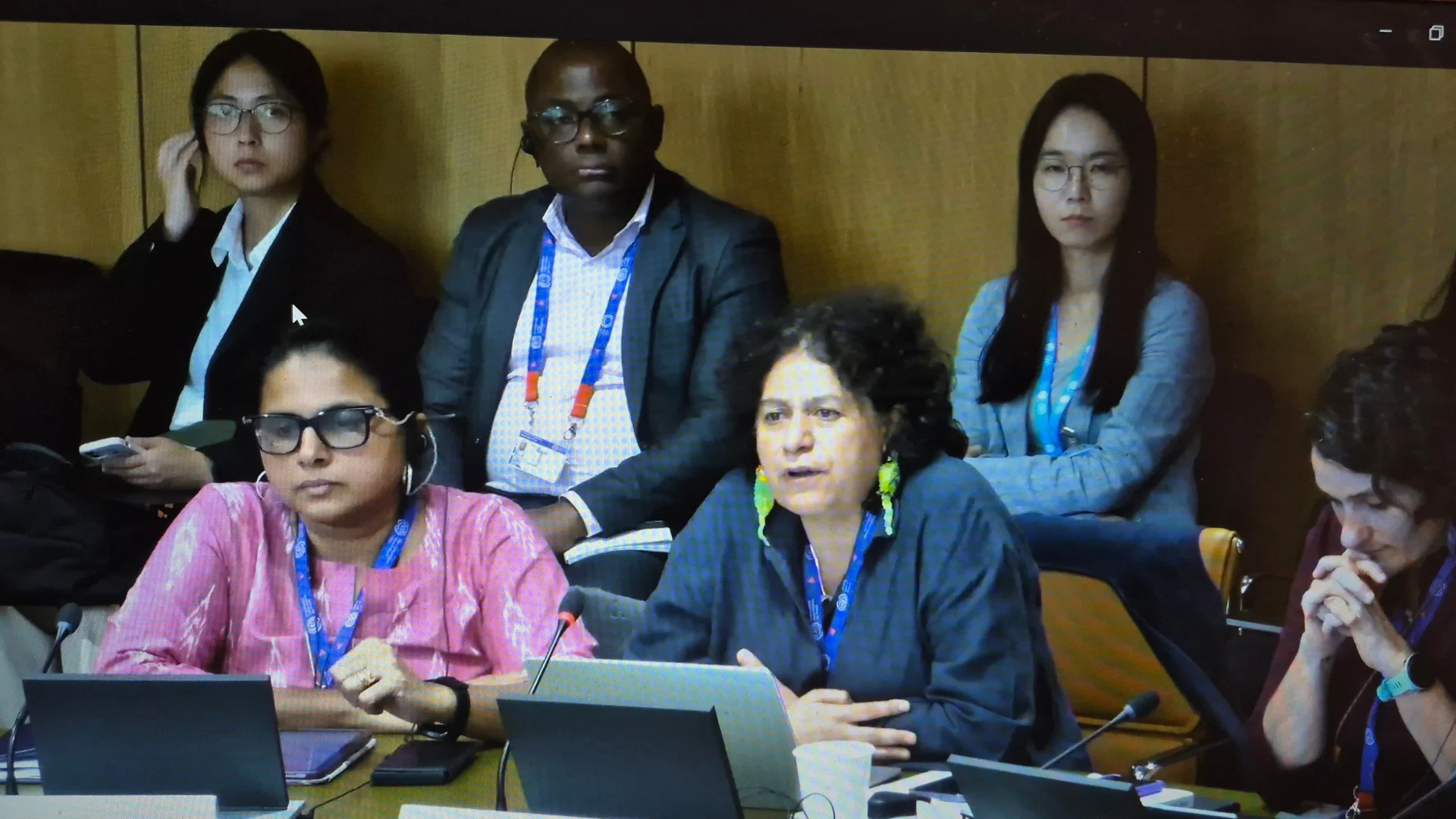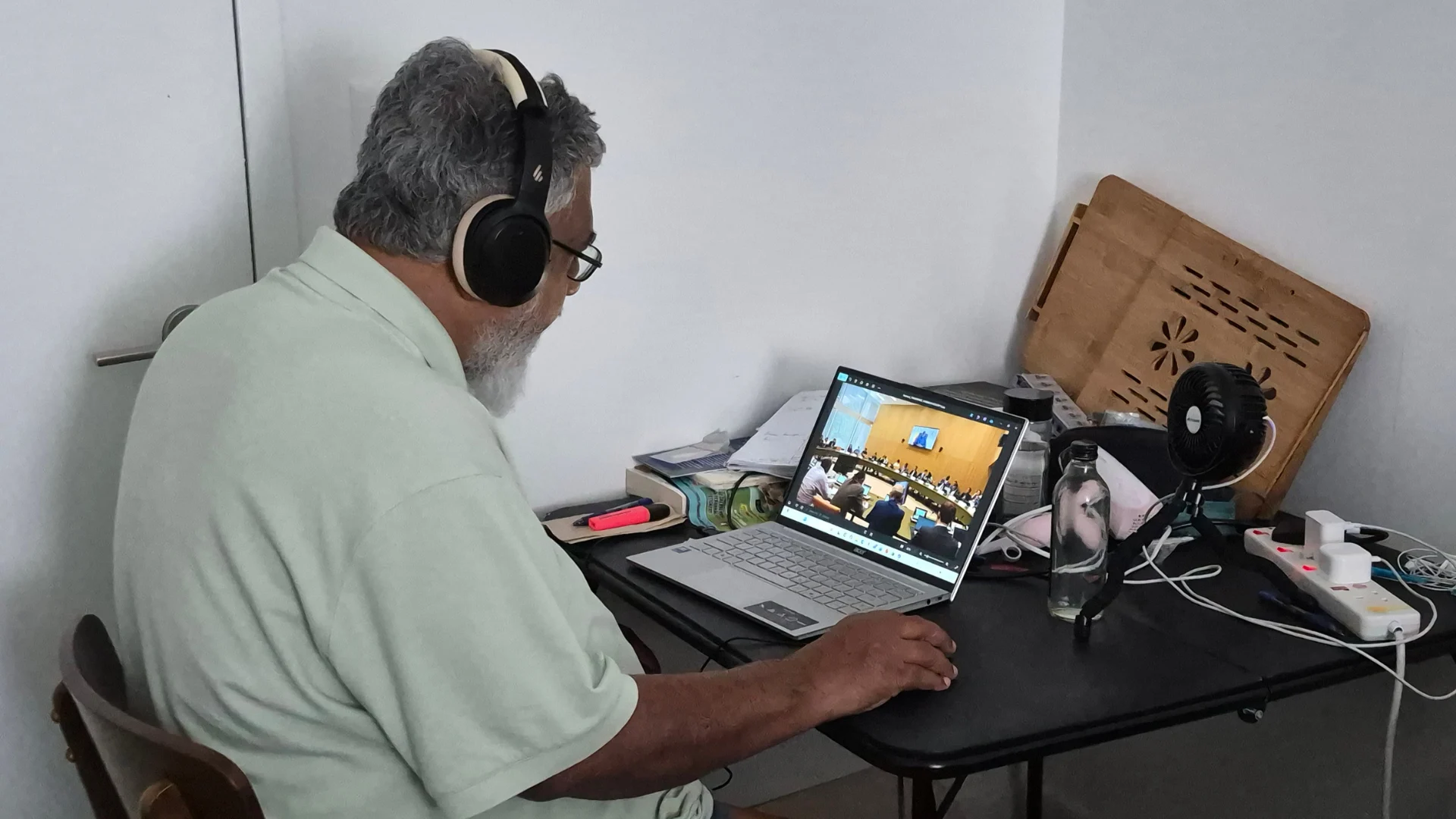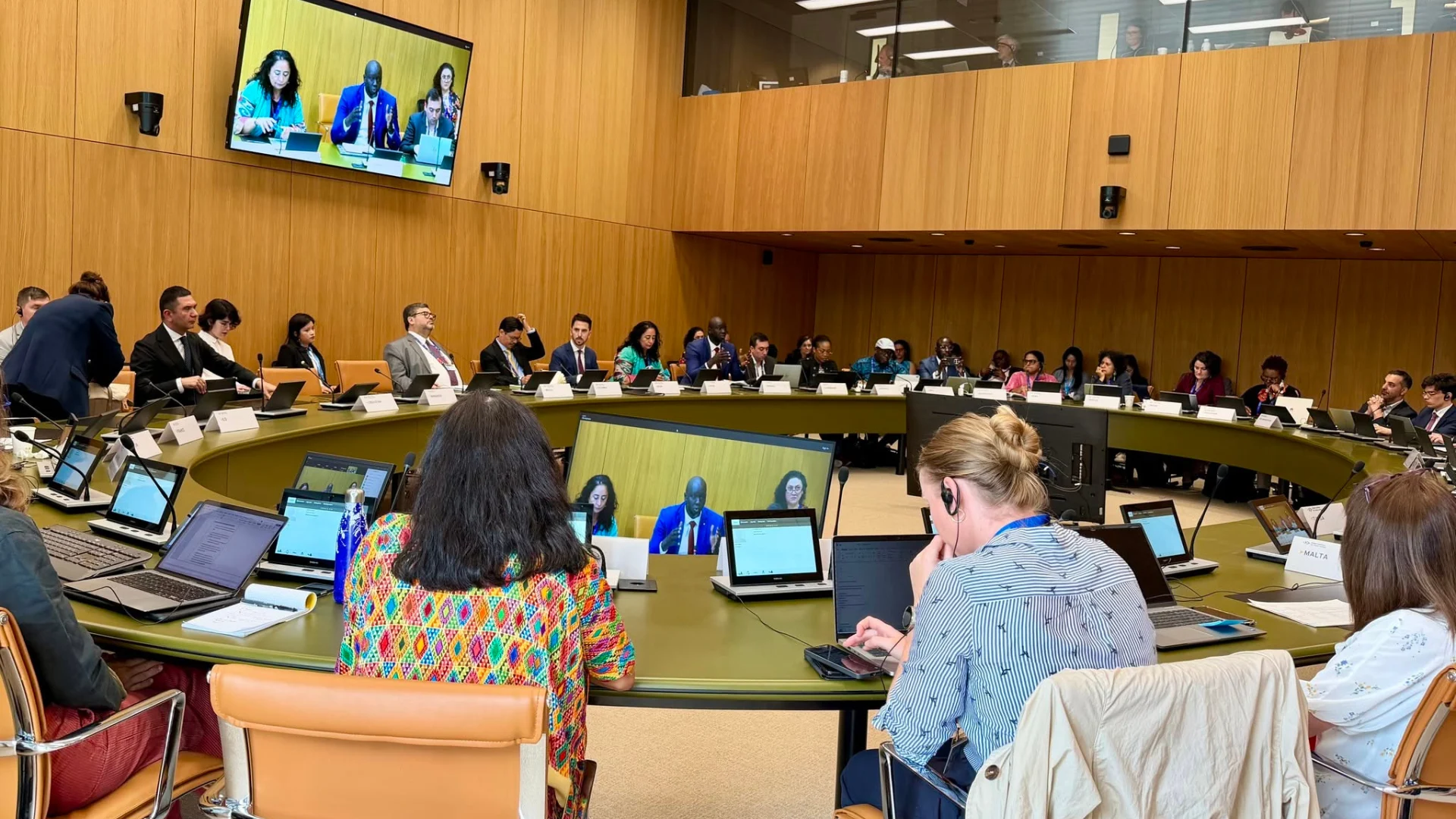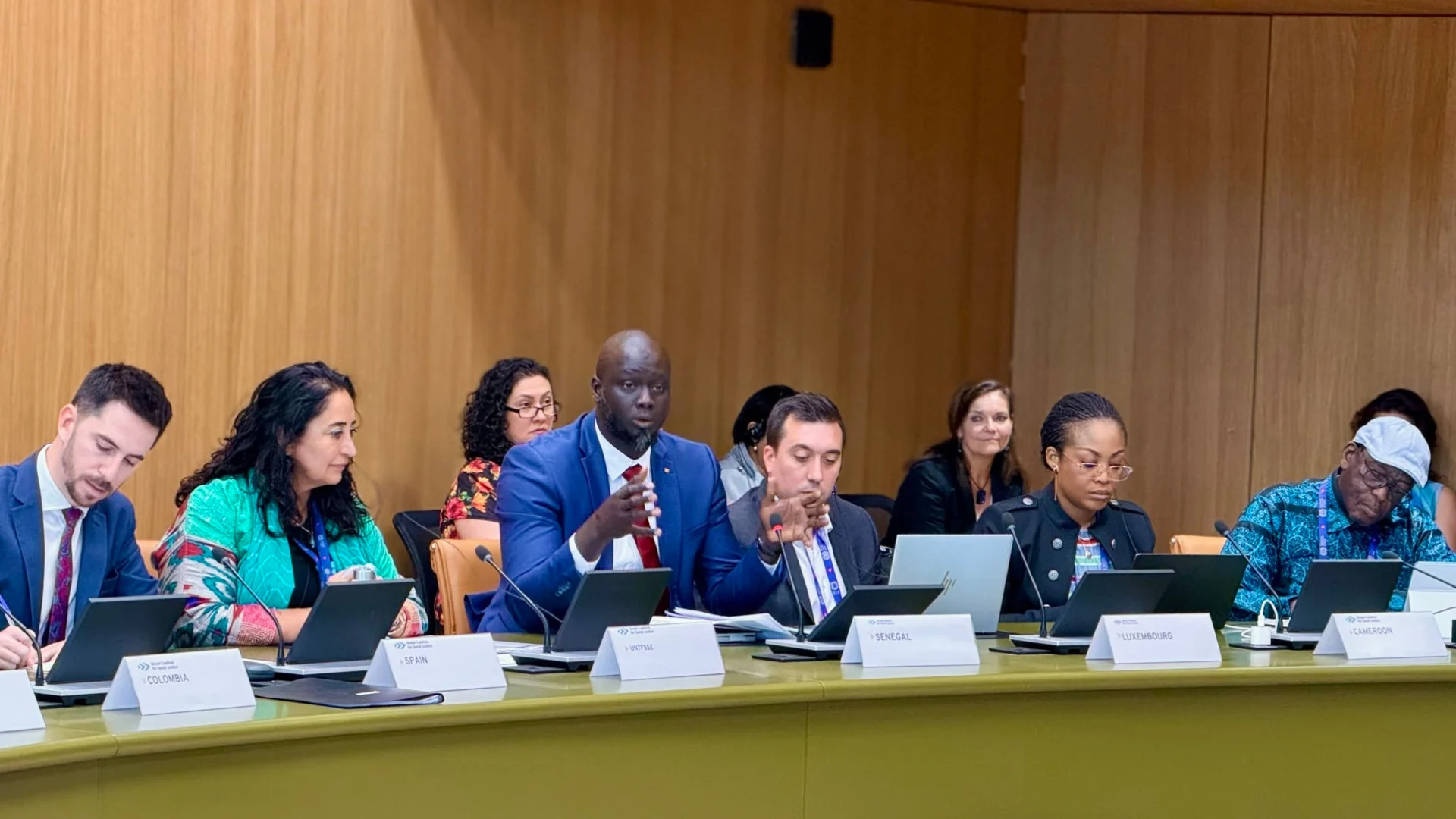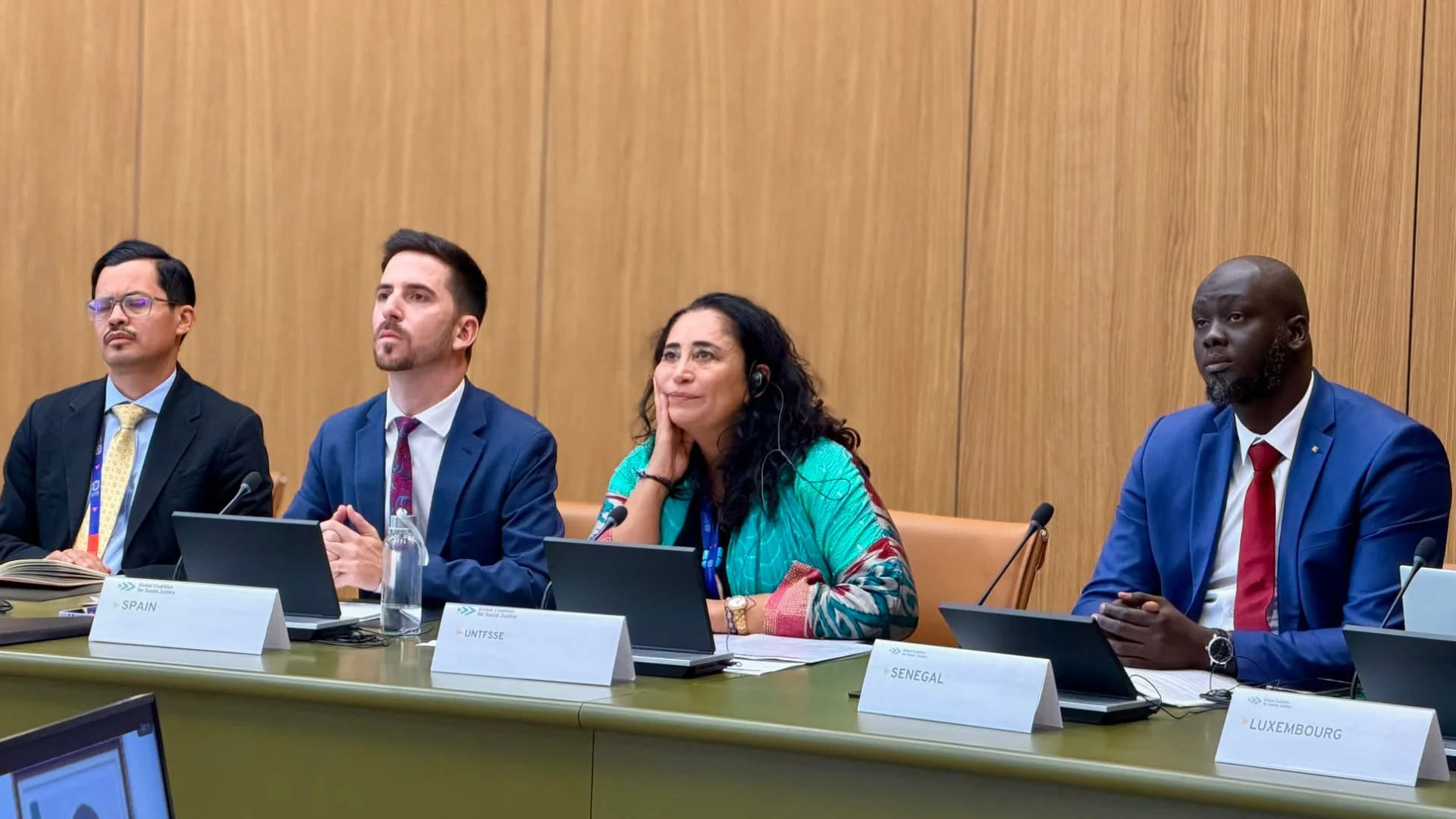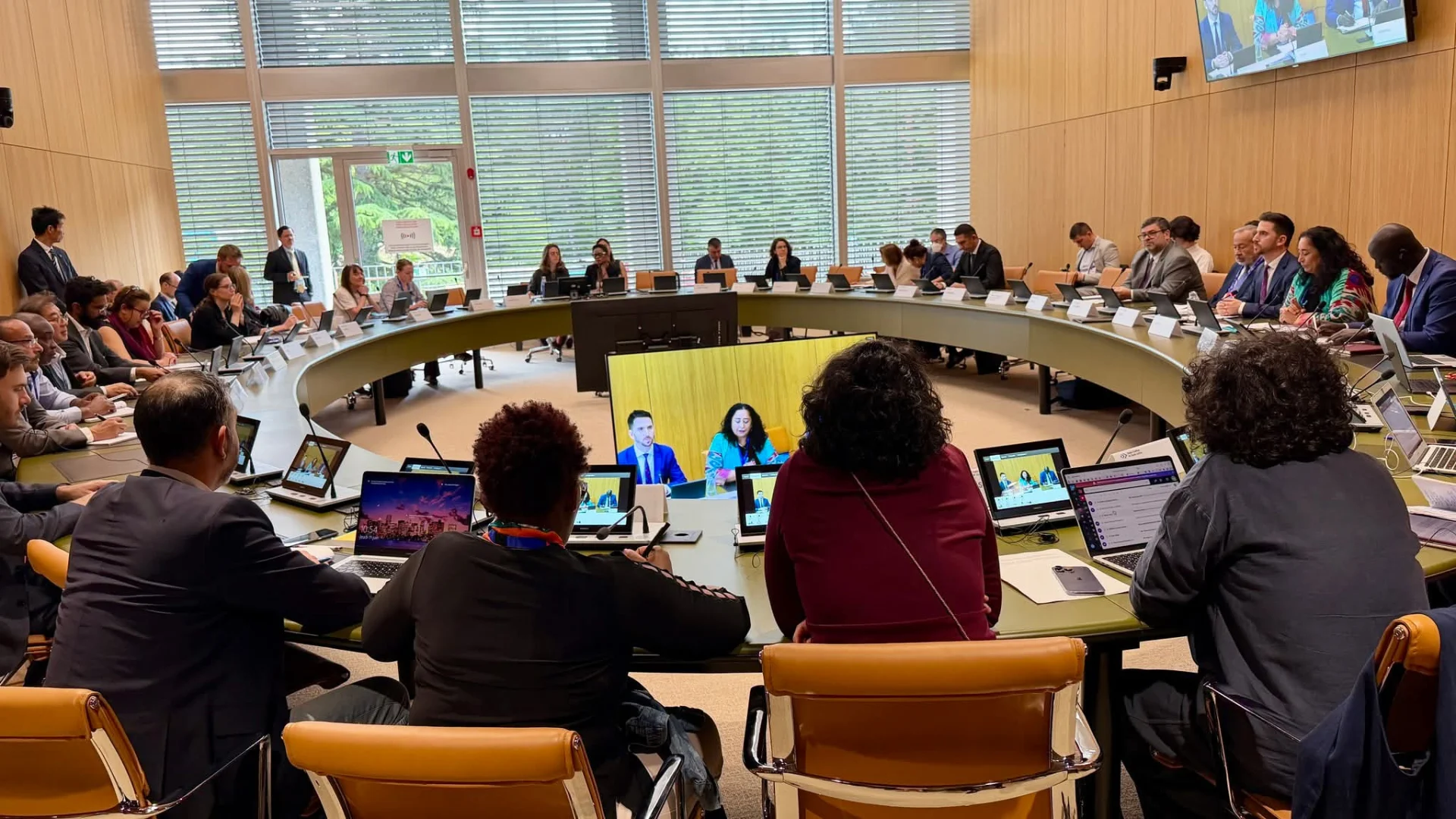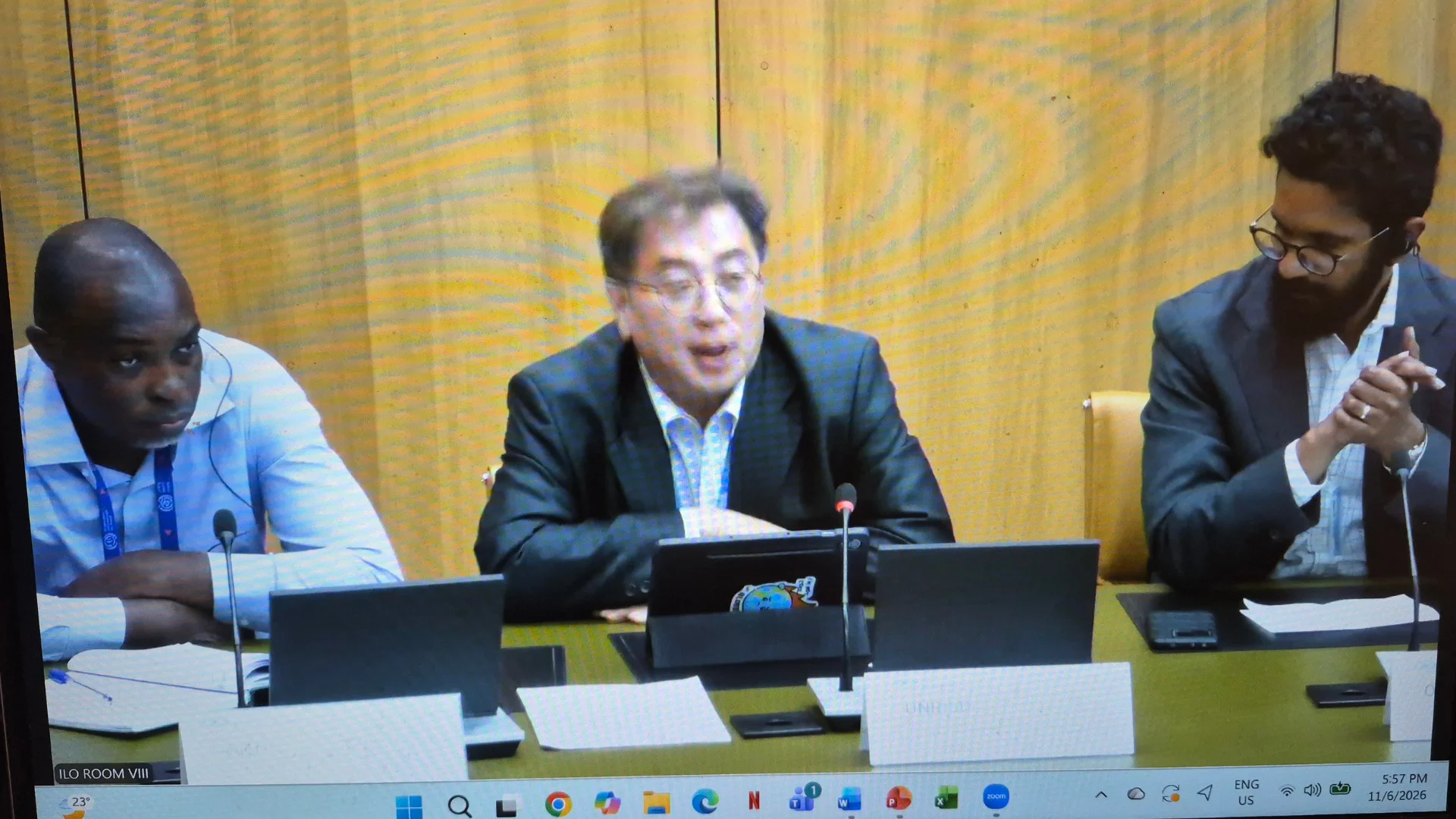

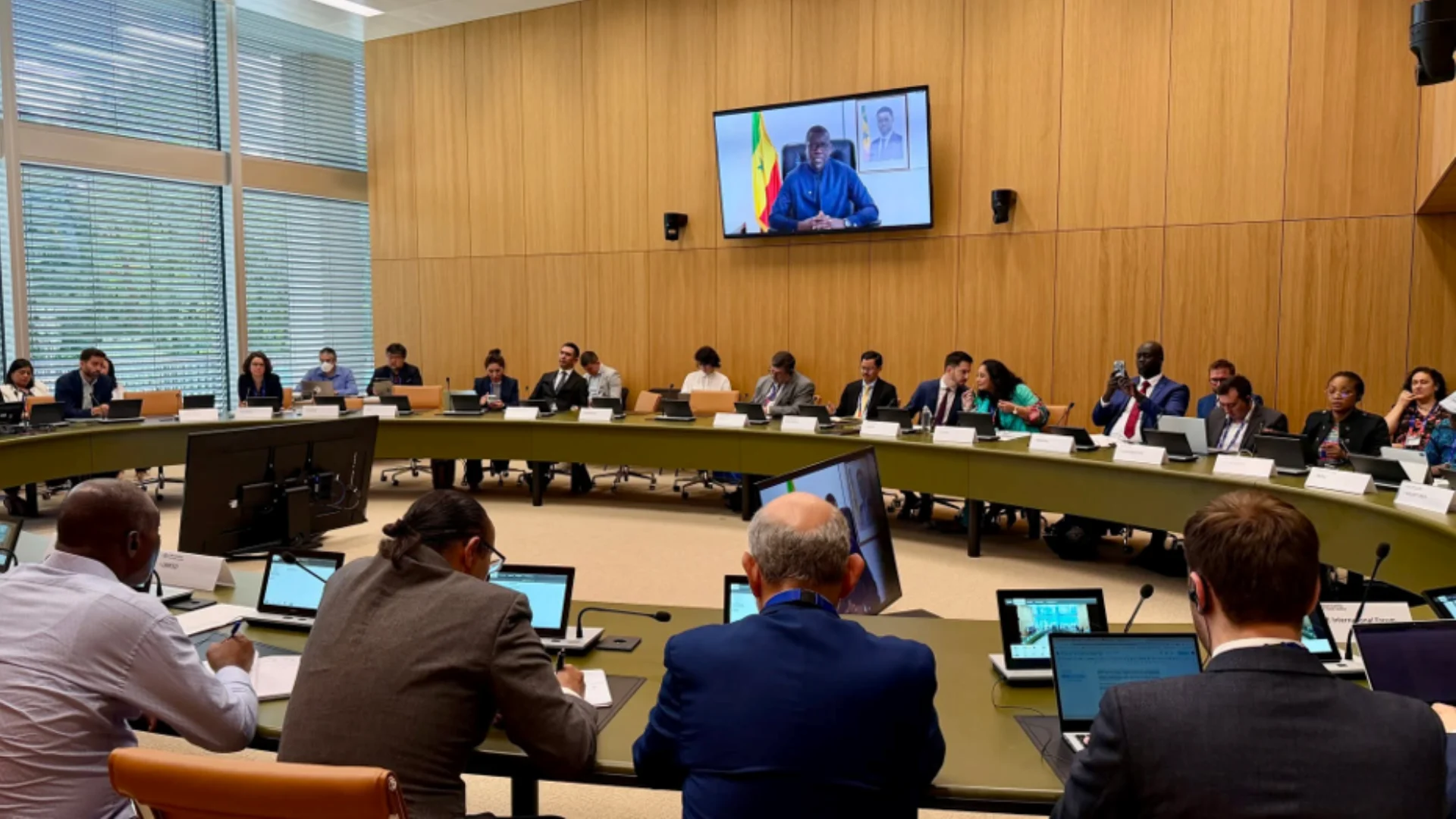
At the Launch at the ILO HQ in Geneva (June 11, 2026)
Convening Countries
This launch meeting of the Group of Friends on the Social and Solidarity Economy (SSE), was co-convened by Brazil , Colombia & Spain , and held on June 11, 2026 at the International Labour Organization (ILO) headquarters in Geneva. This launch serves as a contribution to the Global Coalition for Social Justice.
Participating Countries
Other interested governments, who participated and expressed their support of SSE included Barbados , Cameroon , Côte d’Ivoire , Luxembourg , Mali , Mauritania , Senegal , the State of Palestine and Uzbekistan , shared priorities and experiences concerning cooperation on the SSE. Their interventions reflected growing interest in strengthening intergovernmental dialogue and coordination on the SSE at the global level.
Stakeholder reflections from United Nations entities, SSE actors and other partners highlighted opportunities for collaboration across policy, research, advocacy and implementation.
Participating UN agencies
ILO as the chair of the UN Taskforce on SSE has played a major role. Ms Simel Esim
Head of ILO COOP/SSE Chair of UNTFSSE highlighted the importance of SSE statistics, social innovation and SSE linkages as well as positioning the SSE vis a vis the post 2030 agenda
Contributions included reflections from UN agencies namely World Health Organization (WHO), United Nations Human Rights and United Nations Research Institute for Social Development (UNRISD).
Participating CSO-NGOs
International CSO-NGO organisations also participated and expressed their support for SSE and the need for this global space for the visibility of SSE and the space for global dialogue and interaction
Among them were SEWA, RIPESS, ESS Forum International, StreetNet, Women in Informal Employment: Globalizing and Organizing – WIEGO, CEPES Confederación Empresarial Española de la Economía Social, Social Economy Europe and GSEF – Global Forum for Social and Solidarity Economy.
The discussions highlighted the contribution of the SSE to decent work, sustainable development and social justice, as well as its relevance to ongoing efforts to advance a human rights economy, eradicate poverty beyond growth and strengthen cooperation across countries and institutions.
INTERVENTION FROM MS SIMEL ESIM
Excellencies, distinguished representatives, colleagues and friends, I am pleased to welcome you the launch meeting of the Group of Friends on the Social and Solidarity Economy as Chair of the United Nations Inter-Agency Task Force on Social and Solidarity Economy.
I thank the Governments of Brazil, Colombia and Spain for convening this initiative, and the International Labour Organization for hosting us today.
The Group of Friends gives interested governments a voluntary platform for intergovernmental cooperation on the social and solidarity economy, consistent with relevant resolutions and decisions of United Nations bodies.
The 2024 UN GA resolution on the social and solidarity economy gives particular relevance to today’s launch. It encourages Member States to cooperate through relevant settings within and outside the United Nations, and to consider how the social and solidarity economy could contribute to and feature in relevant multilateral processes.
The Group of Friends can help interested governments carry that cooperation forward.
Statistics is one area where the Task Force can support Member States. Better measurement can help capture the contribution of the social and solidarity economy beyond gross domestic product.
Through its Technical Working Group on Social and Solidarity Economy Statistics, the Task Force supports coordination, methodological exchange and technical inputs that can contribute to the work towards international guidelines concerning statistics of the SSE for consideration at the 22nd International Conference of Labour Statisticians.
The SSE also brings a distinctive approach to social innovation, grounded in its values and principles of cooperation, democratic governance, social purpose, equality and accountability. This helps ensure that innovation advances well-being, decent work, inclusion and sustainable development.
The second Secretary-General’s report on the SSE is another immediate point of follow-up. Many governments have already contributed inputs to its preparation. The report is being prepared in collaboration with the Task Force and will be out in September this year.
Once issued, the report can help Member States and partners review progress, exchange experience and identify priorities for further cooperation, including on statistics, social innovation and policy coherence.
It can also inform discussions on the expected next General Assembly resolution on the SSE, forthcoming later this year, and its contribution to the 2030 Agenda and the post-2030 development agenda.
Today’s participation reflects the broad interest in this agenda. The Group is intergovernmental, and its members will determine how to engage social partners, SSE actors, UN entities and other stakeholders as its work evolves.
On behalf of the Task Force, we welcome the establishment of the Group as a global space through which interested governments can carry forward sustained cooperation on the SSE. Thank you and back to you Jaime.
RIPESS takes part in the launch of the Group of Friends on the Social and Solidarity Economy in Geneva
REFLECTIONS BY DENISON IN PARTICPATING ONLINE AT THE LAUNCH
It was 4.45am in New York when I joined online (June 11) in Geneva for the launch of the Friends of SSE. Both RIPESS and ILO had alerted us in ASEC to join online this historical event, and I was happy that I manged to although I was travelling.
There are several take aways from this launch which impressed me from the speeches made by governments, UN agencies and the CSO-NGOs SSE actors.
First, there is a clear recognition of SSE as a tool for enhancing the SDGs and this is seen as community driven and as a sustainable alternative to dominant economic arrangements. Speakers confirmed the role placed by ILO, the UN Taskforce on SSE as well as the UN endorsement through the two UN SSE Resolutions (2023 & 2024) and the Secretary General Report (2024)[1]. These have given visibility to SSE.
Secondly, Ilcheong Yi, United Nations Research Institute for Social Development (UNRISD), made it clear that measurement and evidence-based work is needed, He made reference to Peter Utting (2015) article “Social and Solidarity Economy: Beyond the Fringe?”[2] In so doing affirmed that SSE was not in the fringes but now in mainstream social development work. The UNRISD contribution through the knowledge hub has strengthening the evidence base of SSE impact.
Thirdly, the presence of 12 state representatives speaking up is very significant. They all recognise the need for this inter-governmental discussion space. In addition, the three UN agencies and 8 CSO-NGO operating at an international level and across the continents demonstrated the multi stakeholder dimension of SSE advocacy and delivery.
Fourth, there were highlights on how SSE visibility has emerged through the work of ILO and the UN Taskforce on SSE. Here the theme of social development is enhanced through decent work, sustainable development and social justice. Specific mention to the ILO Resolution concerning decent work and the social and solidarity economy (SSE) which was adopted in June 2022 at the 110th International Labour Conference.[3] In addition the Doha Political Declaration on Social Development (2025)[4] which made specific reference to SSE was also highlighted by a number of the speakers.
Fifth and finally while Ms Sandra made reference to the work of ASEC on the ASEAN SDG-SSE Roadmap with the Malaysian mySDG Academy, no Asian or ASEAN country participated at this launch. There are many excellent SSE organisations and public policies in Asia and therefore it is a challenge for ASEC in our advocacy work to encourage and ensure our Asian countries too become members of the Friends of SSE.
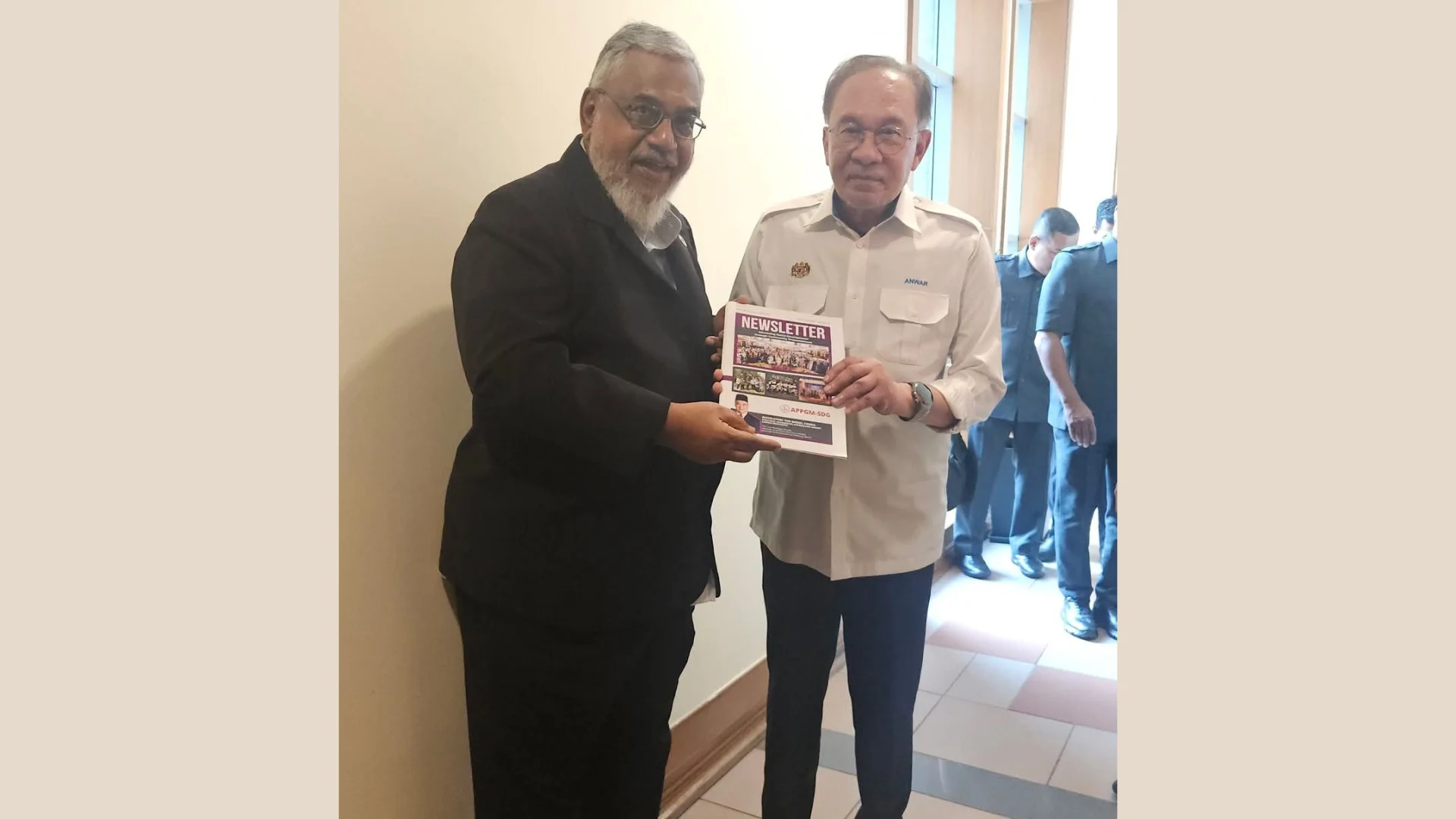
In this context I must affirm that the Malaysian government in the Thirteen Malaysia Plan (2026-2030) made policy reference to social economy and the Third sector with specific reference to the role of cooperatives and social enterprises. In a personal conversation with the Prime Minister of Malaysia recently (May 11, 2026) he declared that he places high importance to people participation in economic development especially in social economy. Malaysia is now elected to ECOSOC for a two-year team (2027 -2029) and we can therefore play an active role in formulating the post SDG 2030 agenda,
Malaysia has much to share as well as our ASEAN partners. The coming years will require greater solidarity and support in reaching the SDG targets in ensuring no one is left behind.
[1] https://journalmp.parlimen.gov.my/index.php/
jmp/article/view/145
[2] https://www.socioeco.org/bdf_fiche-document-3835_en.html
[3] https://www.ilo.org/sites/default/files/wcmsp5/
groups/public/%40ed_norm/%40relconf/documents/
meetingdocument/wcms_848633.pdf
[4] https://social.desa.un.org/sites/default/files/
documents/2025/Doha-Political-Declaration-5Sep2025_0.pdf
[1] https://journalmp.parlimen.gov.my/index.php/jmp/article/view/145
[2] https://www.socioeco.org/bdf_fiche-document-3835_en.html
[3] https://www.ilo.org/sites/default/files/wcmsp5/groups/public/%40ed_norm/
%40relconf/documents/meetingdocument/wcms_848633.pdf
[4] https://social.desa.un.org/sites/default/files/documents/2025/Doha-Political-Declaration-5Sep2025_0.pdf
[1] https://journalmp.parlimen.gov.my/index.php/jmp/article/view/145
[2] https://www.socioeco.org/bdf_fiche-document-3835_en.html
[3] https://www.ilo.org/sites/default/files/wcmsp5/groups/public/%40ed_norm/%40relconf/documents/meetingdocument/
wcms_848633.pdf
[4] https://social.desa.un.org/sites/default/files/documents/2025/Doha-Political-Declaration-5Sep2025_0.pdf
Watch the recording of the launch meeting