
By Kon Onn Sein (ASEC Chair)
The ASEAN People’s Forum (APF) has become Southeast Asia’s most significant civil society platform for advancing human rights, environmental justice and people-centred regional governance. Operating alongside the official processes of the Association of Southeast Asian Nations (ASEAN), the forum creates a space where grassroots organisations, indigenous peoples, migrant workers, youth, environmental defenders and human rights advocates can collectively shape policy recommendations directed at regional leaders.
Although APF does not possess formal decision-making authority within ASEAN, it has developed important mechanisms for influencing regional policy through dialogue, advocacy and sustained engagement with ASEAN institutions.
ASEAN’s Regional Governance Framework
ASEAN is a regional organisation comprising ten member states that promotes political cooperation, economic integration and regional stability. Recent initiatives, including the ASEAN Community Vision 2045, reflect ambitions for deeper regional cooperation on sustainable development, resilience and social inclusion.
However, ASEAN operates through consensus and the principle of non-interference in domestic affairs. While these principles have helped maintain dialogue among diverse member states, they have also limited ASEAN’s ability to respond collectively to issues such as human rights abuses, environmental degradation and democratic crises.This gap creates an important role for civil society.
APF: A People’s Platform
The ASEAN People’s Forum, also known as the ASEAN Civil Society Conference (ACSC/APF), is held annually alongside the ASEAN Summit. It serves as an independent platform where communities affected by regional challenges can articulate their concerns outside formal government negotiations.
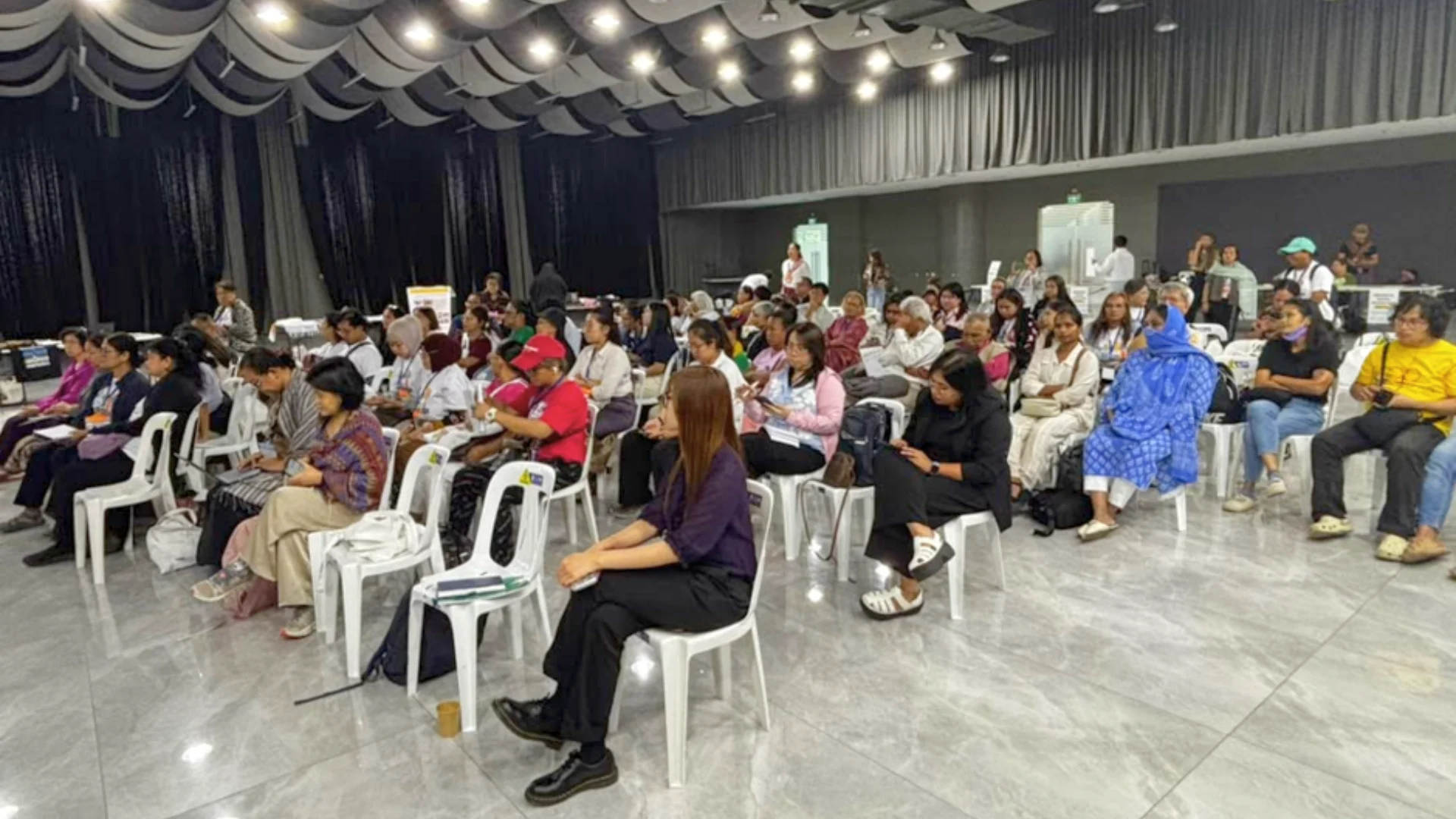
The forum brings together participants from across Southeast Asia, including indigenous communities, labour movements, women’s organisations, youth groups, environmental advocates and academics. Rather than focusing solely on government diplomacy, APF centres discussions around lived experiences of inequality, displacement, environmental destruction and shrinking civic space.
One of its greatest strengths is fostering regional solidarity. Organisations from different countries share strategies, coordinate campaigns and build collective responses to cross-border issues such as the Myanmar conflict, transboundary haze, migrant worker protection and digital repression.
Influencing ASEAN Policymaking
APF influences ASEAN through several interconnected pathways. The forum’s primary output is the Joint Civil Society Statement, developed through national and regional consultations involving participating organisations. This document consolidates policy recommendations on human rights, environmental protection, labour rights and social justice before being formally addressed to ASEAN Heads of State and the ASEAN Secretariat.
Another important mechanism is the ASEAN Leaders’ Interface, where elected civil society representatives meet ASEAN leaders during the summit period. This provides one of the few formal opportunities for grassroots representatives to directly present their recommendations to regional decision-makers.
Civil society organisations also engage throughout the year with ASEAN’s specialised institutions, including:
- The ASEAN Intergovernmental Commission on Human Rights (AICHR),
- The ASEAN Commission on the Promotion and Protection of the Rights of Women and Children (ACWC), and
- The ASEAN Committee on Migrant Workers (ACMW).
When formal channels prove insufficient, APF supplements institutional engagement through public campaigns, international media advocacy and cross-border solidarity networks that increase public pressure on governments.
Human Rights and Environmental Justice
APF’s discussions consistently highlight the interconnected nature of human rights and environmental justice.
Participants share experiences of enforced disappearances, arbitrary detention, loss of livelihoods, attacks on environmental defenders and restrictions on civic space. Particular concern is expressed over situations in Myanmar and West Papua, where violence against civilians raises broader questions about accountability and state power.
Environmental justice is approached not simply as conservation but as a matter of community rights. The forum challenges economic models that prioritise unlimited profit and growth while externalising environmental and social costs onto vulnerable communities. Instead, APF promotes alternative approaches that include climate justice, fair labour, digital rights and stronger protections for communities defending land and natural resources.
Alternative Regionalism
A distinctive feature of APF is its advocacy for what many participants describe as alternative regionalism. Rather than rejecting ASEAN, the forum seeks to broaden its priorities beyond trade and investment by advocating development that places human dignity, environmental sustainability and social justice at the centre of regional cooperation.
Discussions increasingly emphasise the Social and Solidarity Economy (SSE) as a practical pathway for reducing inequality and strengthening community resilience. Rather than focusing solely on critiques of existing economic systems, many workshops concentrate on sharing successful community-led solutions and exploring how these models can be implemented more widely across Southeast Asia.
Challenges and Continuing Influence
APF’s relationship with ASEAN remains constructive but contested. Because ASEAN operates through consensus, governments have occasionally attempted to replace independent civil society representatives with state-approved delegates, leading at times to disputes and walkouts during the Leaders’ Interface process.
Despite these tensions, APF continues to expand its influence by building broad coalitions across sectors. The platform increasingly convenes policymakers, business leaders, academics, youth representatives and international partners to generate policy-relevant ideas capable of supporting regional cooperation.
Ultimately, APF demonstrates that regional policymaking becomes stronger when those most affected by injustice have opportunities to participate. By combining grassroots advocacy, regional solidarity and sustained engagement with ASEAN institutions, the forum helps ensure that human rights and environmental justice remain integral to conversations about Southeast Asia’s future.
Summary
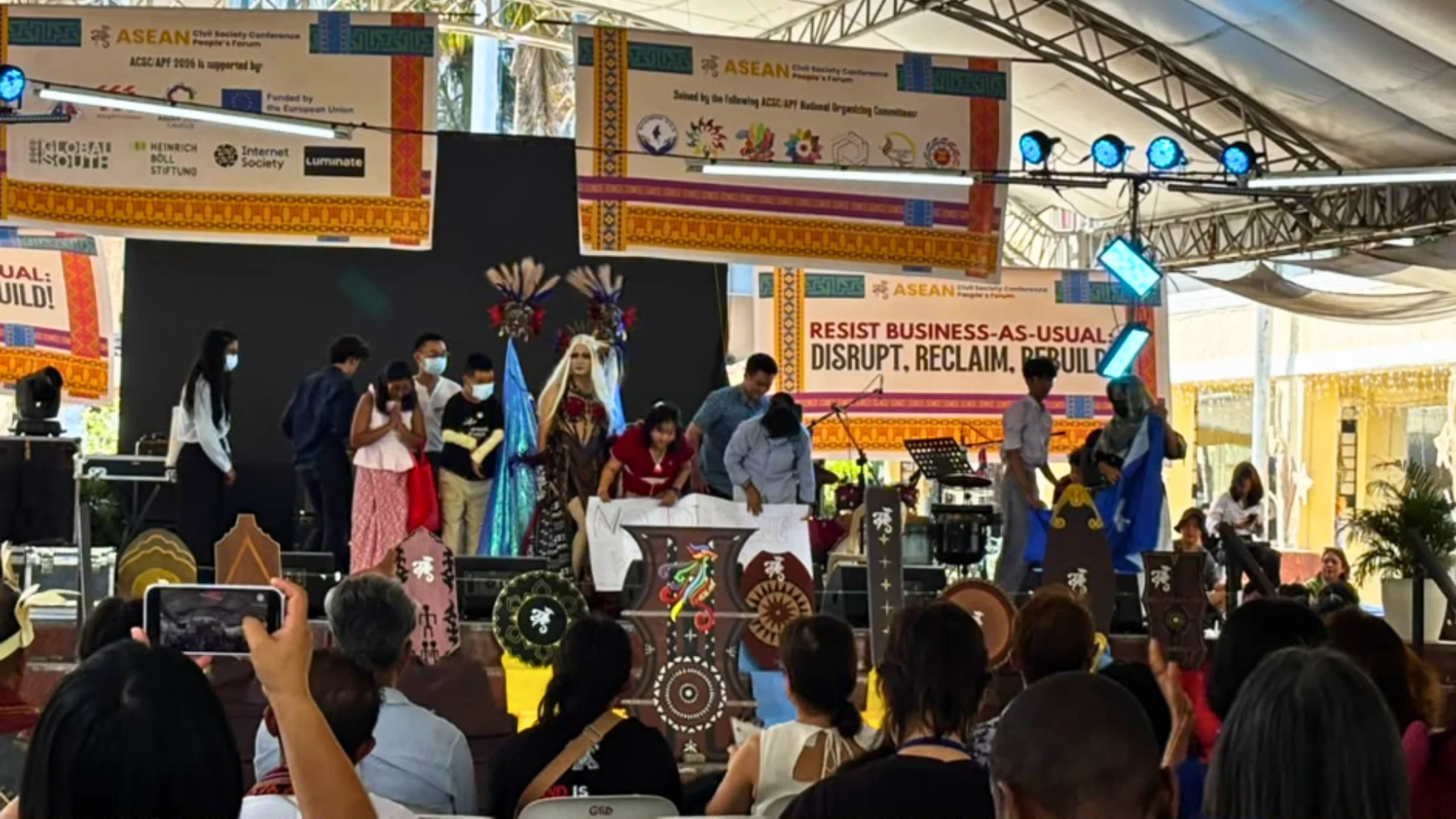
The 2026 ASEAN People’s Forum in Manila carries a powerful message: Southeast Asia cannot continue with business-as-usual approaches to economic development, political governance and regional cooperation while people continue to experience human rights violations, inequality, environmental destruction and shrinking democratic space.
The forum calls on civil society to resist systems that concentrate wealth and political power, disrupt economic and political structures that perpetuate injustice, reclaim people’s rights and democratic space, and rebuild a region founded on social solidarity, human dignity, environmental sustainability and genuine democratic participation.
Its message to ASEAN governments is clear: regional integration must go beyond trade, investment and diplomatic declarations. ASEAN must demonstrate its commitment to its peoples through concrete action to protect human rights, uphold environmental justice, ensure decent livelihoods and hold governments and corporations accountable. Ultimately, the vision is for a Southeast Asia where people, not profit and political power, are at the centre of regional development and decision-making.
The significance of APF 2026 is its attempt to move civil society advocacy from merely asking governments to address individual violations towards questioning the underlying economic and political systems that allow those violations to persist. This is also where the Social and Solidarity Economy becomes particularly relevant as an alternative development pathway.
Read the attachment on the theme of APF 2026 and its relevance